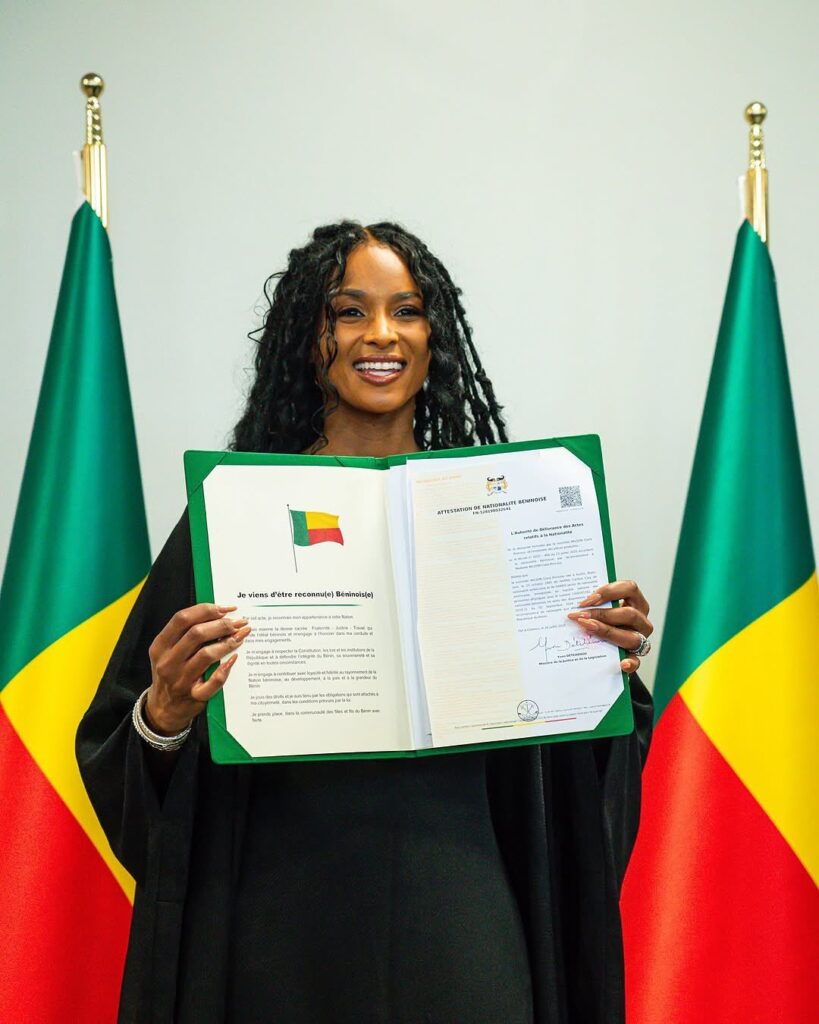
The West African nation of Benin has opened a legal path to citizenship for descendants of enslaved Africans. On July 27, 2025, Grammy Award-winning singer Ciara became one of the first global figures to receive Beninese nationality under a new Afro-descendant citizenship law, prompting a wave of interest from Black communities worldwide.
Benin’s landmark legislation, passed in September 2023, is both a legal and symbolic gesture, aiming to reconnect Afro-descendants with ancestral homelands, acknowledge the country’s role in the transatlantic slave trade, and create a framework for legal repatriation.
Here’s a detailed explainer on how you, too, can apply for Beninese citizenship under the new law.
Who Can Apply?
To qualify for Beninese citizenship under the Afro-descendant law:
- You must be 18 years or older
- You must not already hold citizenship from another African country
- You must provide proof that an ancestor was deported through the transatlantic slave trade
What Counts as Proof?
Applicants must demonstrate lineage through at least one of the following methods:
- DNA Testing – Commercial ancestry DNA results showing West African heritage linked to slave-trade regions.
- Authenticated Testimonies – Sworn affidavits from elders, historians, or cultural leaders verifying generational descent.
- Family Records – Historical documentation such as plantation records, shipping manifests, church archives, or genealogical research.
Where and How to Apply?
Benin recently launched “My Afro Origins,” a digital platform that processes applications for Afro-descendant citizenship. Here’s what the process looks like:
- Visit https://afrodescendants.gouv.bj (official portal)
- Create an account and upload your identification documents
- Submit your proof of ancestry
- Pay application fees (if any)
- Undergo a legal verification process, including possible interviews or further documentation requests
Once approved, you may receive an invitation to a formal citizenship ceremony in Benin, as Ciara did in Cotonou, marking your legal and cultural reintegration.
Why Benin?

Benin holds a unique place in global Black history. An estimated 1.5 million enslaved people were deported from the Bight of Benin — a stretch that includes present-day Benin, Togo, and Nigeria. Unlike many countries complicit in the trade, Benin has taken a transparent approach to its historical role.
The government has invested in “memorial tourism” to create spaces of education and healing. Sites such as the Slave Route and Door of No Return in Ouidah are now central pilgrimage sites for those seeking to confront ancestral trauma and embrace heritage.
How Others Are Involved
Benin is also elevating its outreach by appointing cultural ambassadors to help share its story. Filmmaker Spike Lee and his wife Tonya Lee have been named Afro-descendant ambassadors, responsible for promoting Benin’s repatriation and remembrance efforts in the U.S.
Following her citizenship ceremony, Ciara walked the Slave Route and passed through the Door of No Return. “Between emotion, reflection, and heritage, I experienced a profound return to what truly matters,” she said.
A Legal Movement, Not Just a Symbolic One
This move by Benin is part of a broader legal trend in parts of Africa and the Caribbean where citizenship is being redefined as a form of reparation and reconnection. While countries like Ghana and Sierra Leone offer right-of-return initiatives, Benin’s is one of the first to formalize it into national law.
It places Afro-descendant legal status into the framework of citizenship law, giving it enforceable legal weight and offering nationality as a form of restorative justice.
What This Means for the Diaspora
If you’re of African descent and curious about your ancestral roots, Benin is now offering a legal path home. The law reflects a growing movement across the continent to offer identity, belonging, and citizenship to those whose ancestors were forcibly taken.
For legal professionals, the Afro-descendant law represents a notable development in African nationality law, blending historical accountability with constitutional citizenship rights.
As countries rethink their legal relationships with the global Black diaspora, Benin’s approach might serve as a model of diaspora justice for others to follow.
For more information or to begin your application, visit the official portal at:
🌍 https://afrodescendants.gouv.bj