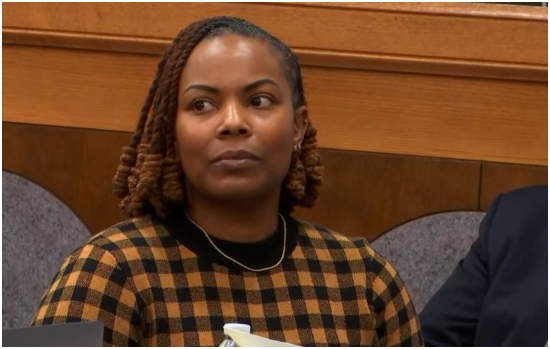
Ebony Parker, the former assistant principal found liable in a civil lawsuit stemming from the 2022 classroom shooting of Virginia teacher Abigail Zwerner, has asked a judge to overturn the jury’s verdict.
She is arguing that the case should never have gone to trial and that the decision against her was legally flawed.
Parker, who was found negligent by a jury and ordered to pay $10 million in damages, has filed multiple post-judgment motions seeking to have the verdict dismissed, the award struck, or, alternatively, a new trial granted. The monetary award has been stayed pending a hearing scheduled for Jan. 30.
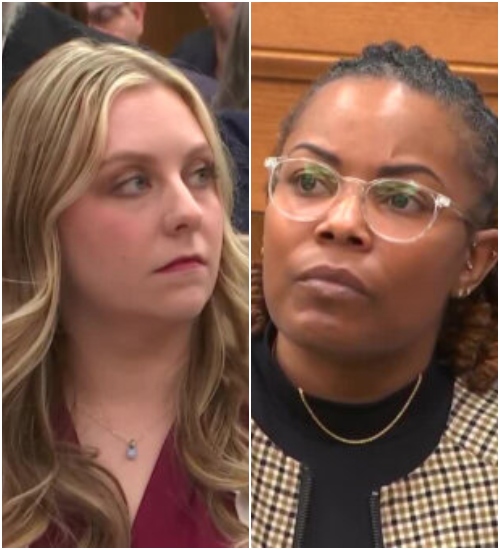
Parker’s Core Argument: Workers’ Compensation Law Applies
At the heart of Parker’s challenge is the argument that Virginia’s Workers’ Compensation Act should have governed Zwerner’s claims and shielded Parker from personal liability. Her attorneys contend that the shooting arose directly from the risks inherent in Zwerner’s job as a teacher and therefore falls exclusively within the scope of workplace injury law.
In court filings, Parker’s legal team argued that all evidence presented by Zwerner points to a workplace injury tied to her employment rather than personal misconduct by Parker.
The motion likens the shooting to other job-related risks faced by public servants, stating that “a student shooting a teacher is much like an at-risk youth strangling a counselor or a prisoner killing a prison guard.”
According to Parker’s attorneys, the absence of any personal relationship between Zwerner and the student underscores that the incident was a risk created by the nature of the job itself — not by individual negligence on Parker’s part.
No Legal Duty to Protect, Parker Argues
If the judge declines to dismiss the case under workers’ compensation law, Parker’s attorneys argue the jury’s verdict should still be set aside because she did not owe Zwerner a legal duty to protect her from the student’s actions.
The filings assert that Parker never assumed a duty to protect Zwerner from J.T., the six-year-old student who carried out the shooting. Even if such a duty existed, they argue, Parker did not act with gross negligence, citing steps she took that day, including allowing the child’s backpack to be searched and calling his mother to come to the school.
The motion further shifts responsibility toward Zwerner herself, alleging contributory negligence. Parker’s attorneys note that another teacher warned Zwerner about the presence of a gun before leaving the classroom and asked her to monitor the student. They argue Zwerner “could have and probably should have separated J.T. from his backpack” but failed to do so.
Claim of Prejudice and Request for New Trial
In a separate motion, Parker’s legal team is asking for a new trial, arguing that she was unfairly prejudiced because the civil case proceeded before the resolution of her criminal charges. Parker is still facing criminal prosecution related to her alleged inaction on the day of the shooting, with that trial set to begin in May.
Because of the pending criminal case, Parker invoked her Fifth Amendment right and did not testify during the civil trial. Her attorneys argue this silence was used against her, pointing to testimony from other school employees and remarks made during closing arguments by Zwerner’s counsel highlighting Parker’s refusal to take the stand.
They maintain that this sequence deprived Parker of a fair trial and improperly influenced the jury’s decision.
What Comes Next
The judge is expected to hear arguments on all post-judgment motions on January 30, a hearing that could determine whether the $10 million verdict stands, is overturned, or is retried.
The outcome may also carry broader implications for school administrator liability, the limits of workers’ compensation protections, and how civil cases intersect with pending criminal proceedings in cases involving school violence.