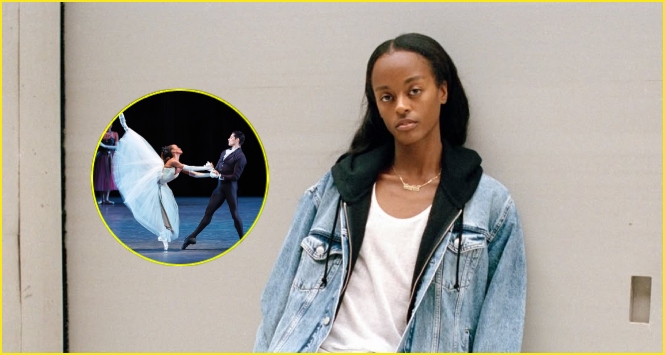
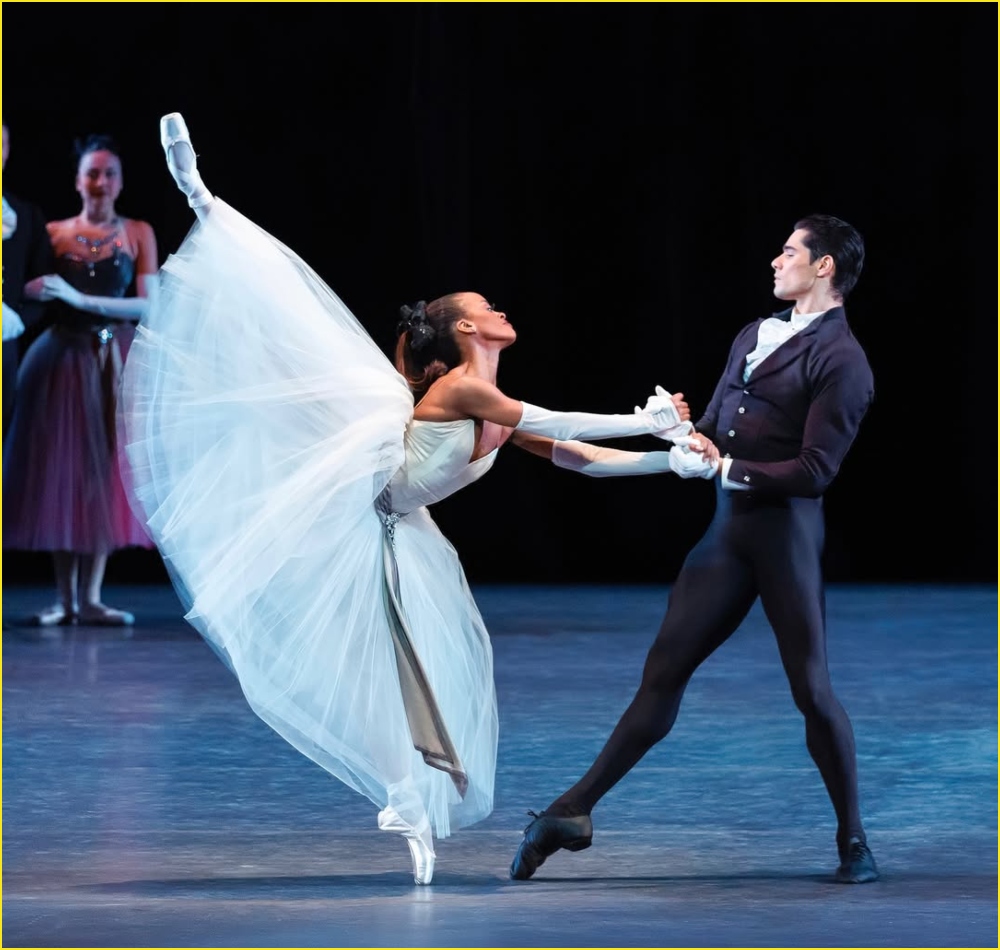
India Bradley has been promoted to Soloist at the New York City Ballet (NYCB), making her the first Black woman ever to hold that title in the company’s storied 75-year history.
The announcement sent waves of celebration across the dance world, amplified by a now-viral video from artist and influencer Cynthia Dragoni, capturing the emotional moment the news broke.
For many, Bradley’s promotion is more than a personal milestone; it’s a long-awaited step toward the kind of representation classical ballet has resisted for generations.

A Breakthrough Years in the Making
Bradley’s rise through NYCB’s ranks has been marked by grace, grit, and a quiet defiance of expectations. She joined the company in 2017, a year after graduating from the School of American Ballet — NYCB’s official academy — and quickly became known for her luminous stage presence and technical precision.
Her performance as the first Black “Dewdrop” in George Balanchine’s The Nutcracker was a landmark moment. It was both a celebration and a reminder: how rare it still was to see a Black woman occupy the spotlight in one of ballet’s most traditional roles.
Bradley’s mentor, Andrea Long, paved the way decades earlier. A former member of NYCB’s Corps de Ballet, Long later became a principal dancer at Dance Theatre of Harlem, one of the few companies historically committed to championing Black ballet artists. Their mentor-mentee relationship represents a quiet lineage of perseverance — women who have had to build pathways where none existed.
“We’ve All Been Rooting for Her”
Bradley’s promotion isn’t just a professional victory — it’s a symbolic one. For young dancers of color, it signals that visibility and excellence can coexist in elite spaces that have historically excluded them.
“She’s a bright and vivacious dancer,” said one observer familiar with the company’s culture. “We’ve all been rooting for her promotion for years.”
Indeed, the celebration across social media echoed that sentiment. Black dancers, teachers, and fans — many of whom grew up seeing few faces like theirs in ballet — shared emotional tributes, calling Bradley’s advancement “hope in motion.”
The Road Ahead: From Soloist to Principal
Still, the journey toward full equity remains unfinished. As of now, the New York City Ballet has never had a Black female principal dancer — the highest rank in the company.
Bradley’s achievement, however, lays the foundation for that next breakthrough. Her artistry challenges long-held stereotypes about what a “ballerina” looks like, and her visibility on stage creates new possibilities for those who will follow.
In a broader sense, her rise also highlights how institutions can — and must — evolve. The NYCB, once criticized for its lack of diversity, has made measured efforts in recent years to broaden access and mentorship. But Bradley’s success is proof that systemic change often starts with individual excellence meeting opportunity.
A Cultural Shift in Pointe Shoes
Ballet, long perceived as the domain of privilege and uniformity, is undergoing a subtle transformation. From companies reevaluating their casting practices to major brands producing pointe shoes in shades of brown and bronze, there’s a growing acknowledgment that diversity enriches the art form rather than diluting it.
Bradley’s promotion is not just a headline — it’s a signal. It tells audiences, and more importantly, aspiring dancers, that grace comes in every shade.
India Bradley’s promotion is both a personal triumph and a cultural reckoning. Ballet’s slow pivot toward inclusion has been a long time coming, and while there’s still a principal dancer barrier yet to be broken, this moment feels like the beginning of a new chapter. History has a way of repeating itself — but in this case, it’s finally beginning to rewrite itself.