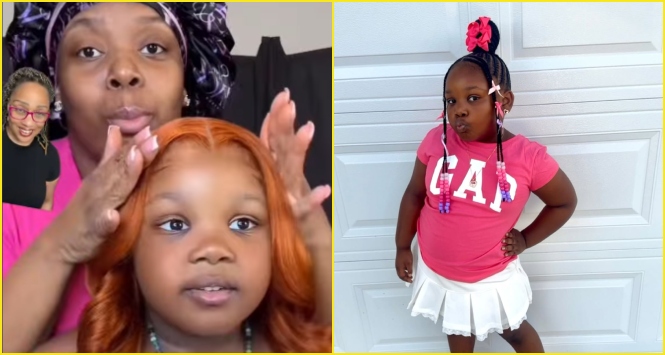
A viral TikTok clip featuring beauty influencer Krystal LaShon and her 5-year-old daughter Novah has gone viral, triggering comments about parenting, beauty culture, and the fine line between self-expression and age-appropriateness.
The video — which has been viewed more than 5 million times — shows the Atlanta-based wig influencer styling a lace-front wig for her kindergartener’s first day of school. With nearly 2 million followers, LaShon is known for her flawless hair tutorials and unapologetic confidence. But this time, it wasn’t just the edges she laid — it was the internet.
Not Too Much on Her
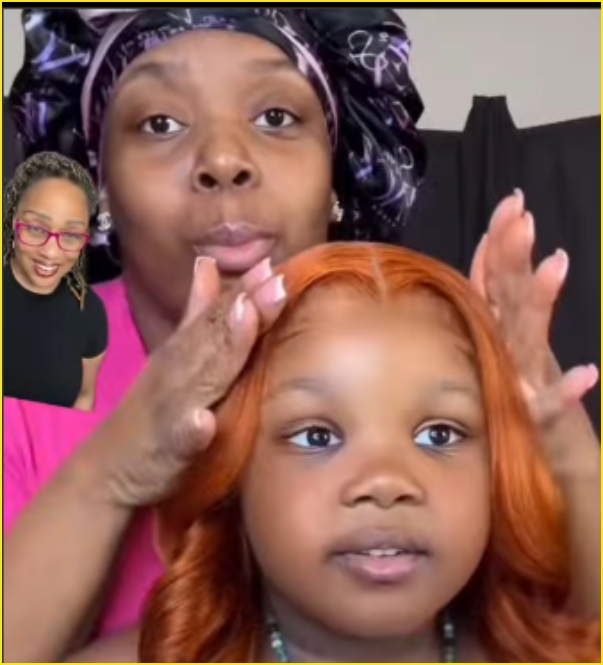
The original viral video has been pulled down, but in other versions posted by other content creators fascinated by the story, LaShon narrates her decision to fit little Novah with the wig after the child’s hairstylist canceled at the last minute.
“She only gone have this on for a couple days, but it is what it is,” LaShon said, addressing her critics directly. “I’ll act like you b****es ain’t play dress-up when y’all was kids, nah. Not too much on her — is y’all mad because y’all kindergarteners ain’t eating it up like this?”
The clip shows Novah sitting patiently as her mother uses a hot comb to style the wig, smiling proudly at the finished look. For some viewers, it was harmless fun — a cute, fleeting moment between a mother and daughter who happen to live their lives online. But for others, it struck a nerve.
Internet Divided: Cute or Concerning?
Comments about the video quickly turned into virtual battlegrounds. Some praised LaShon for her artistry and for bonding with her daughter through beauty and creativity. Others called the video “disturbing,” accusing her of exposing her child to adult beauty standards too soon.
“Let kids be kids,” one commenter wrote. “There’s nothing wrong with doing her natural hair — she’s beautiful without the lace.”
But another wrote: ‘Extenuating circumstances and Mom has a great sense of humor. I’m okay with it.”
But defenders were quick to clap back, arguing that critics were projecting their own biases.
“It’s a wig, not a tattoo,” one fan said. “People forget that little girls play with makeup and wigs all the time — this just happens to be on camera.”
Beauty, Boundaries, and the Business of Influence
What makes this story hit harder than a typical parenting debate is the influence economy behind it. LaShon isn’t just any mom, she’s a digital entrepreneur who earns her living from the same beauty industry she’s introducing to her daughter. The backlash highlights a tension between personal brand-building and parental responsibility in the social media age.
Experts in child psychology have long cautioned that early exposure to adult beauty rituals can affect self-image and confidence in young children. But they also note that context matters — if a child understands it as play or performance, not pressure, the harm can be minimal.
Still, as one parenting advocate noted in a Reddit discussion, “What’s different now is that playtime is public — and forever archived online. That changes everything.”
A Mirror to a Larger Conversation
Whether LaShon’s choice was harmless fun or a step too far depends largely on where one stands in the ongoing debate over Black motherhood and beauty standards.
Historically, Black hair has carried deep cultural, political, and emotional significance. For many Black mothers, styling their daughter’s hair is a rite of passage, not a vanity project.
In that context, LaShon’s decision may be seen not as glamorization, but as representation — a demonstration that Black beauty comes in all forms, even playful wigs.
But the conversation also forces a reckoning with how early the performance of beauty — especially online — begins. When does self-expression turn into spectacle? When does empowerment start to look like imitation?
For now, LaShon seems unfazed by the criticism. “She did good with the hot comb,” she said proudly in her clip, “and that’s on period.”
Whatever one’s opinion, one thing is clear: the internet’s fascination with how Black women — and now their daughters — wear their hair isn’t fading anytime soon.