
Viola Ford Fletcher — one of the last living survivors of the 1921 Tulsa Race Massacre and, in her final years, one of its most determined truth-tellers — has died at age 111.
Her grandson, Ike Howard, confirmed that she passed away Monday, Nov. 24, 2025, at a Tulsa hospital, surrounded by family. Fletcher, sustained throughout her long life by faith, hard work and a fierce sense of purpose, raised three children, welded ships during World War II and spent decades caring for families as a housekeeper.
But in the end, she became known to the world as something else: the keeper of a suppressed chapter of American history.
A Childhood Shattered
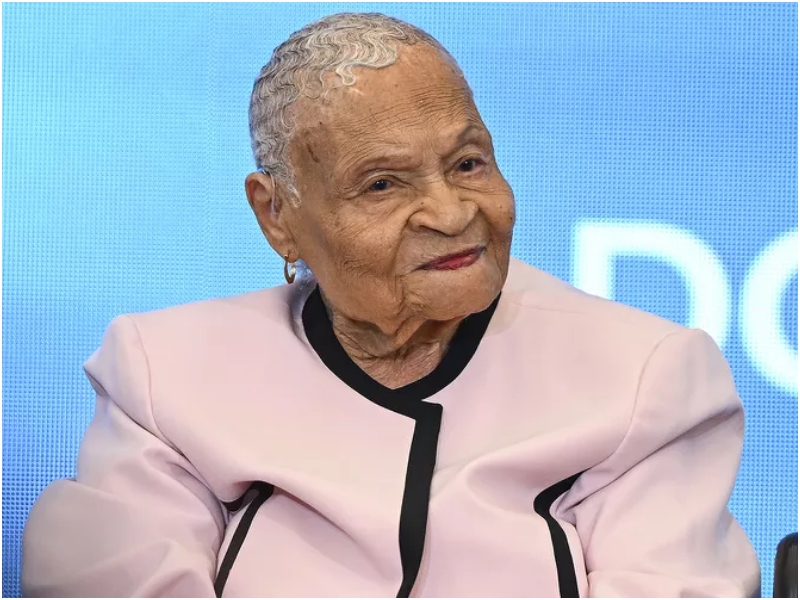
Fletcher was just seven when the white mob descended on Greenwood — the prosperous Black district known as Black Wall Street.
The two-day attack, triggered by a sensationalized newspaper report alleging a Black teen assaulted a white woman, led to hundreds of deaths and the destruction of more than 30 square blocks of Black homes and businesses.
“I could never forget the charred remains of our once-thriving community,” she wrote in her 2023 memoir, Don’t Let Them Bury My Story.
Her memories were vivid: burning eyes from drifting ash as her family fled in a buggy; corpses in the street; and the horror of watching a white man shoot a Black man before turning his gun toward her family.
Like many survivors, Fletcher remained silent for decades — partly from trauma, partly from fear of retaliation.
“We don’t want history to repeat itself,” her grandson Howard said. “To understand why you need to be made whole, you need to understand what was taken.”
A Late-Life Mission for Justice
When Oklahoma reopened public conversations about the massacre in the late 1990s, Fletcher, then in her 80s, began reclaiming her story. In 2021, at 107 years old, she testified before Congress — a moment that brought national recognition to a tragedy the country had long ignored.
Her fight did not end at testimony. Alongside her brother, Hughes Van Ellis, and fellow survivor Lessie Benningfield Randle, she became a plaintiff in a landmark lawsuit seeking reparations.
The Oklahoma Supreme Court dismissed the case in June 2024, ruling the claims did not fall under the state’s public-nuisance law. Fletcher and Randle responded with resolve:
“For as long as we remain in this lifetime, we will continue to shine a light on one of the darkest days in American history.”
Van Ellis died in 2023 at 102. Randle, now in her late 100s, remains the sole known survivor.
A Century of Resilience
Fletcher’s life spanned segregation, World War II, the civil rights movement and the growing national reckoning with racial violence.
After the massacre forced her family into nomadic sharecropping life, she returned to Tulsa as a teenager, worked in retail, later moved to California, became a wartime welder and eventually rebuilt her life back in Oklahoma.
She survived domestic abuse, raised children largely on her own and worked until age 85. Through it all, her community and church fortified her.
Tulsa’s mayor, Monroe Nichols, called her passing a profound loss: “Mother Fletcher endured more than anyone should, yet she spent her life lighting a path forward with purpose.”
The Fight She Carried
In her final years, Fletcher became a symbol of moral clarity in the struggle for recognition and repair. Her presence at public events drew standing ovations. Her testimony ignited new efforts to document the massacre. And her voice — calm but unyielding — insisted that America confront the truth it tried to bury.
Her grandson said speaking out became a kind of healing for her. “This whole process has been helpful,” he reflected.
Healing, however, is not the same as justice. Fletcher left this world without receiving formal compensation or restitution from the state or city — despite being one of the last living witnesses to one of the worst episodes of racial terror in U.S. history.
Her death now leaves the country with an urgent question: If justice was not delivered while survivors still lived, what does accountability look like going forward?
Fletcher spent her final years insisting that the answer must come — and that it must be honest.
She often said she feared the world would forget her story. Instead, her passing ensures it becomes even harder to ignore.

