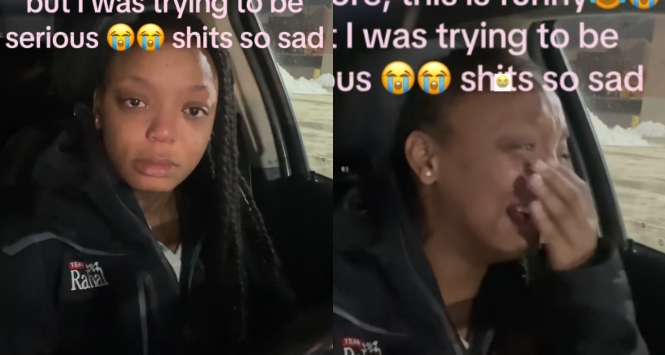
An emotional video posted online by a 25-year-old woman named Cynthia is triggering varied perspectives across social media about the reality of being an adult these days.
Comments and views prompted by the raw clip border on issues relating to economic insecurity, loneliness and the crushing expectations placed on young adults.
In the now-viral video, Cynthia appears alone in her car, openly sobbing as she describes her life circumstances.
“I’m crying because I’m poor and I’m stressed,” she says, her voice shaking. She explains that she has no stable career, no children, and no romantic partner. “I don’t have a boyfriend or a husband,” she adds through tears. “That’s another story.”
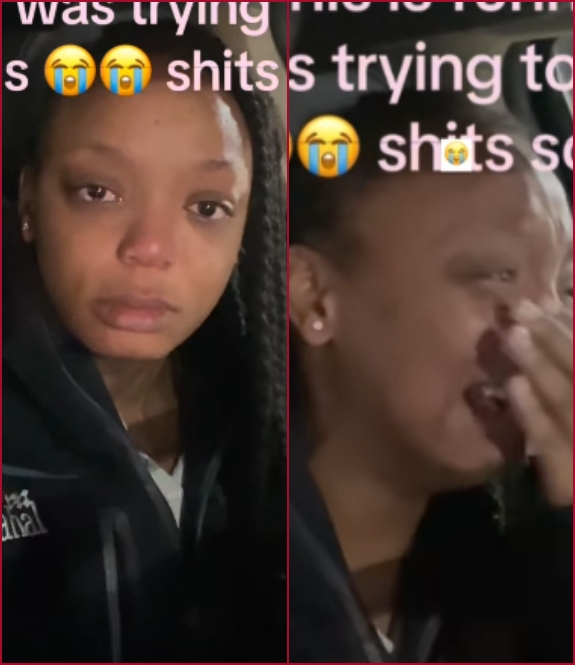
The video, widely shared by popular social media accounts, has resonated with thousands who say her words echo their own private fears — fears rarely voiced so plainly in public.
A Personal Breakdown That Reflects a Collective Reality
While Cynthia’s pain is deeply personal, experts and commentators note that her experience reflects a growing reality for many young adults navigating adulthood in the mid-2020s. Rising living costs, stagnant wages, student debt, unstable job markets and the erosion of traditional career paths have left many people in their 20s feeling stuck, behind, or “failed” before their lives have truly begun.
At the same time, social media continues to amplify narrow definitions of success — marriage, children, financial stability, and professional achievement — often at increasingly younger ages. For many viewers, Cynthia’s tears represent the collision between those expectations and economic reality.
“She’s saying out loud what so many people are thinking in silence,” one commenter wrote. “Not because she’s lazy or unmotivated, but because the system feels impossible.”
Loneliness in an Era of Hyper-Connection
Beyond finances, Cynthia’s video also highlights another growing issue: social isolation. Living alone, without a partner or immediate family support, many young adults report feeling emotionally adrift despite being constantly connected online.
Sociologists have pointed to declining marriage rates, delayed parenthood and fragmented communities as contributors to a more independent generation — but also more alone. For women in particular, these pressures are often intensified by cultural timelines around relationships and motherhood.
Cynthia does not blame anyone in her video. Instead, she simply asks an unspoken question that many viewers recognized instantly: What happens next when you don’t look like the version of adulthood you were promised?
From Viral Moment to Cultural Mirror
The emotional response to the video has been swift. While some critics dismissed it as oversharing, far more viewers responded with empathy, encouragement and shared stories of their own struggles.
“Girl. If I knew in my 20s what I know now, pre-baby and kids, I’d be at work aaaaaall the tiiiiiime,” one person commented.
“You did enough love. You’re healthy, have employment, car, place to stay. That’s a major start. Focus on you & the rest will come 🙏🏾🫶🏾,” another person encouraged her.
Mental health advocates say moments like this, while painful, can also be important. They expose the emotional toll of economic stress and unrealistic life benchmarks, and they challenge the idea that personal hardship is always the result of individual failure.
Cynthia has not indicated whether she expected the video to go viral. But in breaking down on camera, she has inadvertently become a symbol of a generation wrestling with delayed dreams, financial anxiety and the quiet fear of being left behind.
Her tears, many argue, are not just about having “no husband, no career and no kids.” They are about uncertainty — and about living in a world where stability feels increasingly out of reach. Click here to watch the full clip.