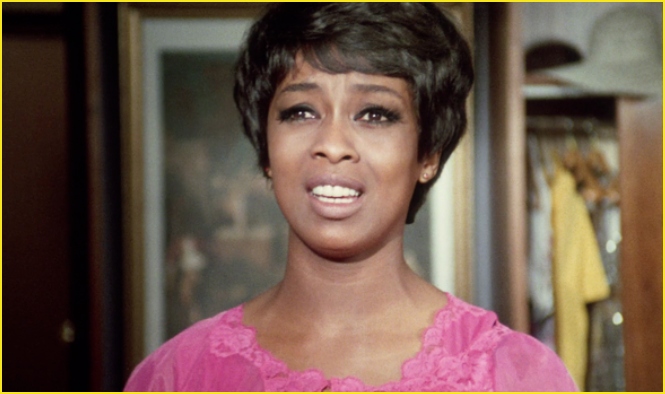
Before Las Vegas called her Queen, before the world crowned her The Black Venus, Lola Falana had already written herself into history.
Born Loletha Elayne Falana in Camden, New Jersey, to an Afro-Cuban father and a Black American mother, Falana’s story began in modest circumstances and rose through sheer will, faith, and an unshakable belief in her purpose.
From Philadelphia church choirs to the neon lights of the Las Vegas Strip, she was more than a performer. She was proof that Black women could command the spotlight, on their own terms.
“The only thing that can touch a mass of people is the soul — and the soul can’t lie,” Falana once said.
And touch souls, she did.

A Star Before Her Time
In the early 1960s, a teenage Falana arrived in New York City with just $26 and a dream. Performing in Harlem clubs, she caught the attention of Sammy Davis Jr., who cast her in his Broadway musical Golden Boy. That role sparked a career that soon stretched from Broadway to Hollywood to Rome, where she filmed Italian features and honed her craft before returning home to dominate American television and film.
By the late 1970s, Falana had shattered glass ceilings few dared to touch:
✨ The first Black woman to headline a major Las Vegas residency.
✨ The first Black woman to front a national beauty campaign (Fabergé’s Tigress fragrance).
✨ A Tony Award nominee and the highest-paid woman on the Las Vegas Strip.
Falana was more than glamour, she was grit. Behind the sequins and satin was a woman who fought quietly against a system that tried to limit her brilliance. Vegas audiences called her Queen, but to millions of young Black girls, she was something greater, the blueprint.
Faith After Fame
At the height of her success, Falana’s life took a dramatic turn. In 1987, she was diagnosed with multiple sclerosis, which left her partially paralyzed. For someone whose life had been defined by movement and rhythm, the diagnosis could have ended everything. Instead, it transformed her.
Falana turned from the stage to the spirit, founding The Lambs of God Ministry, a faith-based initiative supporting children in Sub-Saharan Africa. Her message of compassion and resilience became her next act — quieter, but no less powerful.
“I never sought fame,” she once said. “The doors just opened. God gave me a little biddy talent — and He helped me make the most of it.”

A Legacy Reborn
Though she retired from performing decades ago, Falana’s legacy continues to inspire. In 2024, Lori Harvey portrayed her in Fight Night: The Million Dollar Heist, introducing a new generation to the woman who defined Black glamour long before social media and “representation” became buzzwords.
Her influence still echoes in every performer who dares to blend artistry with authenticity, sensuality with spirituality. In an industry that often demanded compromise, Falana never bartered her soul. She embodied what it meant to be both divine and determined.
As one admirer wrote, “Lola Falana didn’t just perform — she moved the world.”