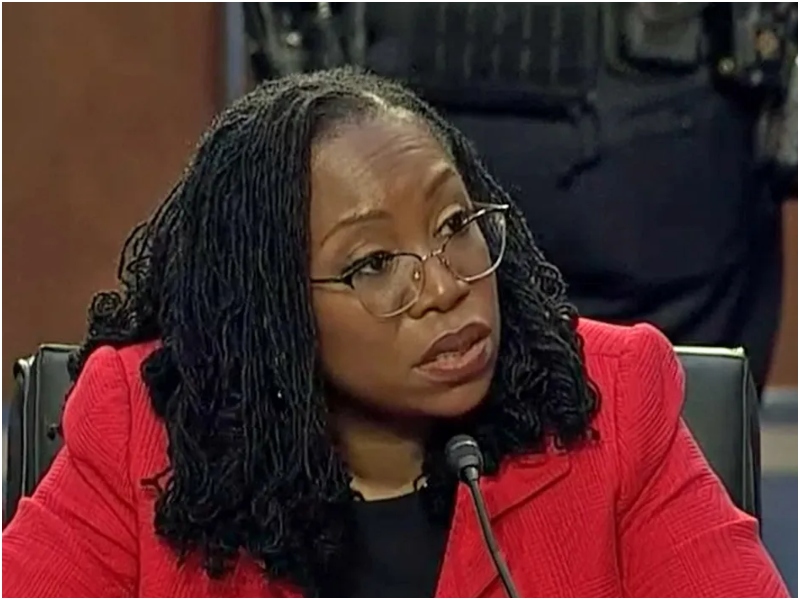
Supreme Court Justice Ketanji Brown Jackson on Friday night, Nov. 9, 2025, temporarily paused a lower court order that required the Trump administration to fully fund November benefits for the nation’s largest food assistance program, the Supplemental Nutrition Assistance Program (SNAP).
The move, issued as an administrative stay, delays enforcement of a ruling that had compelled the administration to release an estimated $4 billion by midnight to keep SNAP fully operational during the ongoing federal government shutdown.
Jackson’s brief order — issued in her capacity as the justice overseeing emergency appeals from the 1st U.S. Circuit Court of Appeals — means the pause will remain in place until that appellate court issues its own judgment. She did not refer the matter to the full Supreme Court.

A Late-Night Legal Standoff Over Food Aid
The decision capped a day of frantic legal back-and-forth between federal courts and the Trump administration, as millions of low-income Americans awaited clarity on whether their November SNAP benefits would arrive in full.
Earlier Friday, the 1st Circuit had denied the administration’s request for a stay of U.S. District Judge John McConnell Jr.’s order, which directed the U.S. Department of Agriculture (USDA) to pay full benefits despite the budget impasse. Within hours, the Solicitor General, John Sauer, urgently petitioned the Supreme Court for relief, warning of “imminent, irreparable harms.”
“Given the imminent, irreparable harms posed by these orders, which require the government to transfer an estimated $4 billion by tonight,” Sauer wrote, “the Solicitor General respectfully requests an immediate administrative stay.”
SNAP vs. WIC: Competing Safety Nets
At the heart of the dispute lies a bitter argument over how to prioritize limited emergency funds during a shutdown. The Trump administration claims it cannot legally or fiscally draw down enough from Section 32 funds — a Depression-era reserve created under the Agricultural Adjustment Act of 1935 — to fund both SNAP and the Women, Infants, and Children (WIC) nutrition program.
Officials argue that diverting the $4 billion to SNAP would “starve Peter to feed Paul,” depriving millions of mothers and children who rely on WIC.
But the plaintiffs — a coalition of local governments and nonprofits — accuse the administration of playing politics with food security. They argue that the government’s claim of financial strain is “entirely unsupported,” noting that $23 billion remains available in Section 32 funds — enough, they contend, to sustain both programs.
“The defendants callously disregard the grave harm that will befall millions of Americans if they succeed,” their filing said.
A Judge’s Sharp Rebuke
Judge McConnell, in his fiery ruling Thursday, had accused the administration of “withholding SNAP benefits for political reasons.” He cited President Trump’s own remarks earlier in the week — that “SNAP will not be funded until the government reopens” — as evidence of intentional pressure on Congress.
“The President’s statement that he intends to defy a lawful court order is unacceptable,” McConnell wrote. “People have gone without for too long. Not making payments to them for even another day is simply unacceptable.”
The Trump administration pushed back, insisting that the president’s comment merely reflected reality — that the appropriations for SNAP had lapsed and “it is up to Congress to solve this crisis.”
States Act Amid Uncertainty
Even as the legal battle intensified, at least nine states began distributing SNAP benefits by Friday afternoon, following USDA guidance that funds were being processed.
Officials in California, Wisconsin, Kansas, Pennsylvania, New York, New Jersey, and Vermont confirmed that full SNAP benefits were being issued. Kansas alone distributed $31.6 million to 86,000 households, while Wisconsin released $104.4 million to 337,000 families.
New Jersey Governor Phil Murphy said his state “acted immediately” to process benefits once federal funds were released.
For many families, the stop-and-start funding has created anxiety during a season when grocery costs are already rising. Advocates say any interruption in benefits — even for a few days — could leave vulnerable households choosing between food and other essentials.
Political Fault Lines and Public Fatigue
The case has exposed sharp divisions not just between branches of government but also within the public conversation about judicial power and political accountability.
Former Florida Attorney General Pam Bondi, now a senior adviser in the Trump administration, blasted the appeals court ruling before Jackson’s stay, calling it “judicial activism at its worst.”
“A single district court in Rhode Island should not be able to seize center stage in the shutdown,” Bondi wrote, “and dictate its own preferences for how scarce federal funds should be spent.”
Critics, however, argue that the administration’s resistance underscores a deeper indifference toward working-class Americans who depend on federal nutrition aid.
“This fight isn’t about accounting — it’s about accountability,” said one nonprofit director in Providence. “When Washington stops working, families go hungry first.”
Justice on Hold
Justice Ketanji Brown Jackson’s decision is, for now, a procedural pause, not a political verdict. But symbolically, it captures a nation trapped between law and livelihood — where every ruling carries human consequences.
For millions of Americans, SNAP is not an abstraction. It’s breakfast. It’s dinner. It’s survival.
And while courts debate the separation of powers, households across the country wait for their next meal.
Whether the Trump administration will ultimately be compelled to release full SNAP funds — or succeed in shielding Section 32 reserves for other programs — remains uncertain. What is clear is that the clock is ticking for those who can’t afford to wait.