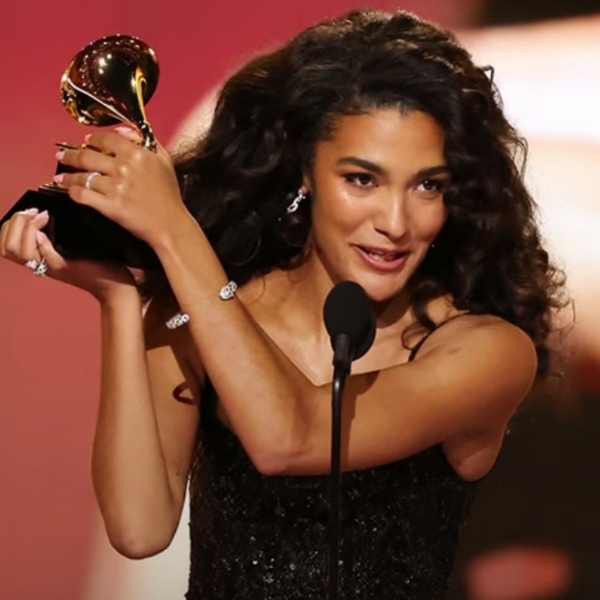
British singer Olivia Dean made history on Sunday night, Feb. 1, 2026, after becoming the first Black British woman to win the Grammy Award for Best New Artist, cementing her rise from London street busker to one of global pop’s most celebrated new voices.
The 26-year-old artist claimed the coveted prize at the 68th Grammy Awards in Los Angeles, emerging victorious from a competitive field that included fellow Brit Lola Young and American R&B singer Leon Thomas. Her win confirms her status as one of music’s most compelling breakout stars and marks a landmark moment for British and Black representation at the Grammys.
Accepting the award, Dean reflected on her roots and the journey that brought her to the world’s biggest music stage.
“I’m up here as a granddaughter of an immigrant,” she said. “I’m a product of bravery and I think those people ought to be celebrated.”
Dean’s victory was powered by a run of soulful, romantic pop releases that found wide audiences on both sides of the Atlantic. Songs such as Man I Need and So Easy (To Fall In Love) became transatlantic hits in 2025, while Man I Need climbed to number two on the US Billboard Hot 100. She also delivered a buoyant live performance of the track during the ceremony.
Born in Tottenham and raised in Highams Park, north-east London, Dean’s musical ambitions began early. She has previously spoken about being inspired by watching her cousin, So Solid Crew rapper and actor Ashley Walters, but credits a childhood trip to Woolworths with her grandmother to buy Leona Lewis’s A Moment Like This as a formative moment.
Her career has followed a steady, slow-burn ascent. Dean first gained attention with her 2019 EP OK Love You Bye, before earning a Mercury Prize nomination for her debut album Messy. It was her second album, The Art of Loving, that propelled her into the mainstream. Recorded in a rented house in east London with a close-knit group of collaborators, the album topped the UK charts and produced three concurrent Top 10 singles.
The project’s intimate, jazz-toned sound and conversational storytelling resonated widely, distinguishing Dean in an industry often driven by spectacle. Speaking previously about her creative process, she said the album was shaped by long nights of conversation, good food and an unpressured environment that allowed honesty to guide the music.
Beyond her sound, Dean has earned admiration for challenging industry norms. Early in her career, she pushed back against being boxed in as an R&B artist, insisting her music spans pop, folk, alternative and soul. More recently, she drew headlines for demanding refunds for fans who paid inflated resale prices for tickets to her US tour, prompting Ticketmaster to cap resale prices and issue refunds for excessive markups.
Her advocacy and authenticity have attracted praise from across the industry, including Sir Elton John, who personally congratulated her on recent award nominations. Music insiders say her appeal lies in a mix of charm, discipline and emotional clarity.
“She’s a real hard worker,” said Stuart Worden, principal of the BRIT School, which Dean attended as a teenager. “She’s worked hard on her songwriting, her stage presence and her craft.”
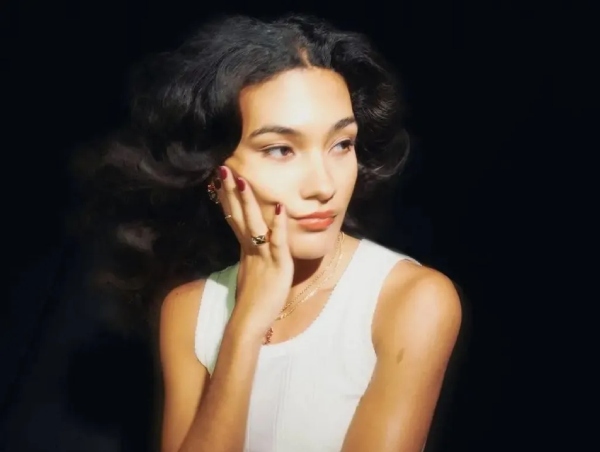
Dean’s Grammy win comes just weeks after she and Lola Young led nominations at the 2026 Brit Awards. By joining former Best New Artist winners such as Amy Winehouse, Adele, Billie Eilish and Olivia Rodrigo, she now stands firmly in pop’s elite company.
For many fans and observers, Dean’s breakthrough represents more than personal success. It is being celebrated as proof that staying true to one’s stories and sound can still cut through globally — and as a powerful signal to the next generation of artists watching from the margins.
As one broadcaster put it, Olivia Dean is no longer music’s best-kept secret. She is, unmistakably, a global star.