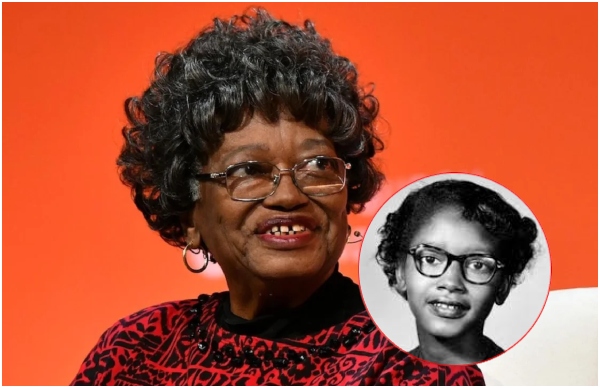
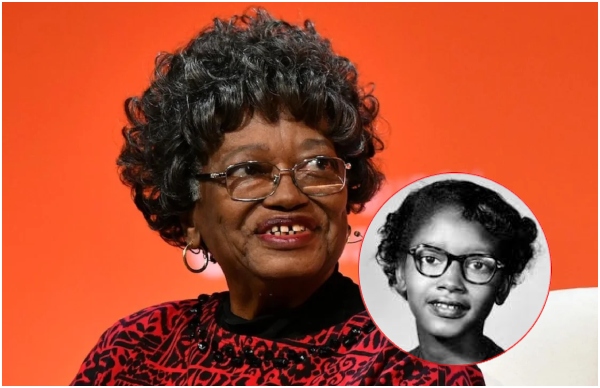
Claudette Colvin, a pioneering figure in the United States civil rights movement whose quiet act of defiance helped dismantle racial segregation on public transportation, has died at the age of 86.
Colvin passed away on Tuesday, Jan. 13, 2026, under hospice care in Texas, according to confirmation from Ashley Roseboro, a spokesperson for her family and the Claudette Colvin Foundation.
In March 1955, at just 15 years old, Colvin was arrested in Montgomery, Alabama, for refusing to give up her seat on a city bus to a white woman, in violation of Jim Crow segregation laws. Her arrest occurred nine months before Rosa Parks’ more widely recognized protest and marked one of the earliest publicized acts of resistance against segregated public transportation in the city.
Despite the courage of her action, Colvin remained largely unrecognized for decades. Civil rights leaders at the time believed Parks—an older, established community figure and secretary of the local NAACP chapter—would be a more effective symbol around which to mobilize mass protest. Issues of age, class, and colorism also contributed to Colvin being sidelined, according to historians and family representatives.
Colvin later recalled that her decision to remain seated was inspired by lessons she had been studying in school about abolitionist heroes. During testimony, she famously said she felt Harriet Tubman on one shoulder and Sojourner Truth on the other, adding that “history had me glued to the seat.”
Although she was not chosen as the public face of the Montgomery Bus Boycott, which began in December 1955 and helped propel the Rev. Martin Luther King Jr. onto the national stage, Colvin played a crucial legal role in the fight against segregation. She became one of the plaintiffs and a key witness in Browder v. Gayle, the federal lawsuit that successfully challenged Montgomery’s segregated bus system.
The case culminated in a landmark 1956 US Supreme Court decision declaring racial segregation on public transportation unconstitutional—a ruling that effectively ended the Jim Crow bus laws in Montgomery and across the country.
After her civil rights activism, Colvin lived largely out of the public eye. She worked for years as a caregiver and nurse’s aide while raising her children as a single mother. About a year after her arrest, she became pregnant following an encounter she later described as statutory rape, a development that further complicated her public standing at the time.
In later years, historians, educators, and activists worked to restore Colvin’s place in civil rights history. Fred Gray, the attorney who argued Browder v. Gayle, credited her with helping ignite the movement against segregation in the Deep South.
“I don’t mean to take anything away from Mrs Parks,” Gray once said, “but Claudette gave all of us the moral courage to do what we did.”
In a measure of long-delayed justice, Colvin succeeded in having her juvenile arrest record expunged in recent years, Roseboro said.
Today, Claudette Colvin is increasingly recognized as a foundational figure in the struggle for racial equality—one whose bravery as a teenager helped change the course of American history.