
When Josephine Baker boarded a ship for France in 1925, she carried little more than ambition and the weight of a country that refused to see her worth.
Nearly a century later, Black Americans are following a similar map!
As political uncertainty, systemic racism, and economic inequity reshape life in the United States, a growing number of Black Americans are choosing expatriation—a modern exodus that echoes the path Baker carved when she fled Jim Crow for the freedom of Parisian stages.
“I was born a Negro, and I wasn’t allowed to be the real American I so wanted to be,” Baker once reflected. Her words now reverberate across generations.
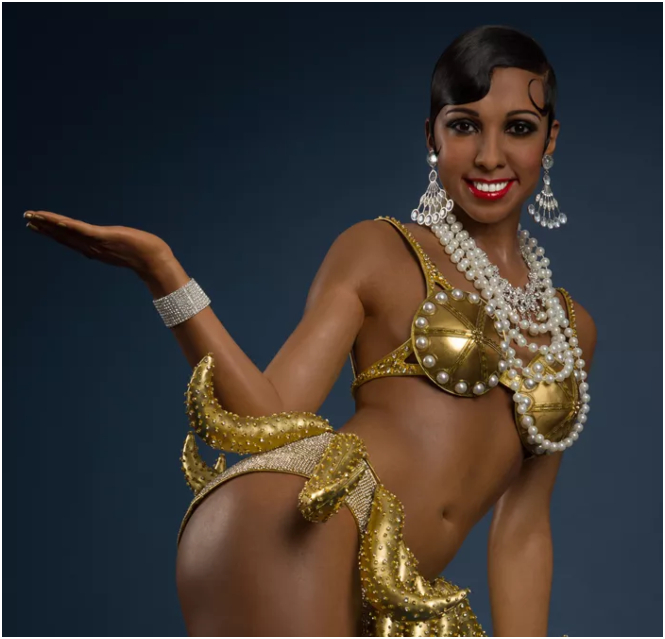
The Stage That Refused Her
Born Freda Josephine McDonald in St. Louis, Missouri, Baker came of age in a nation scarred by racial violence. She witnessed the East St. Louis riots of 1917, where white mobs terrorized Black communities. She climbed from street-corner performances to the Black vaudeville circuit and onto Broadway—only to find America’s ceiling for Black women artists remained stubbornly low.
She did not change who she was. She changed the environment that failed to value her.
In Paris, Baker became a sensation. Her 1925 debut in La Revue Nègre launched her into international stardom. She earned more money, controlled her contracts, and directed her own image—rights America had denied her. By the 1930s, she was one of the highest-paid performers in Europe. She later worked as a spy for the French Resistance, marched beside Dr. Martin Luther King Jr. at the 1963 March on Washington, and adopted 12 children from around the world as her “rainbow tribe.”
Her exile became empowerment. Her displacement became legacy.

The New Wave
Today, nearly 700,000 Black Americans live abroad—a figure that continues to climb. For many, the motivation mirrors Baker’s: not rejection of home, but reclamation of self.
Brooklyn-born filmmaker Octavia Nicole Clahar is preparing to relocate to Paris. Like Baker, she is an artist seeking space to breathe. Like Baker, she is chasing a stage that recognizes her gifts without requiring her to shrink.
“I feel a freedom when I’m in Paris that I just don’t feel in New York,” Clahar told BET. “As a Black American, I’m accepted in a way that feels affirming.”
Clahar’s vision includes building a creative salon in Paris—a space for artists to collaborate and rest, free from the grind of American hustle culture.
“Paris values rest in a way New York doesn’t,” she said. “That slower pace is something my spirit needs.”
Chrishan Wright, founder of Blaxit Global, relocated to Portugal after years of climbing corporate ladders in the U.S. and finding the reward didn’t match the cost.
“My whole life, I wanted to move abroad,” Wright said. “I wanted peace, affordable health care, and a society that respected people of all ages.”
She found it. Wright now lives in Portugal, where her living expenses dropped by more than half. Routine medical care that cost hundreds in America runs about €40. The country consistently ranks among the world’s safest.

The Common Thread
The parallels between Baker’s era and our own are difficult to ignore.
In Baker’s America, Black women were denied stages, contracts, and dignity. In today’s America, Black women face a maternal mortality rate more than three times that of white women. Black-majority neighborhoods in cities like Chicago are miles from trauma centers. Civil rights protections face rollbacks. Authoritarian rhetoric rises.
“Every time there’s another policy debate, another racial flashpoint, it chips away at your spirit,” Clahar said. “I don’t want to wait until I’m broken to choose myself.”
Wright put it more directly: “The ground is shifting underneath our feet.”
Both women describe their decisions not as abandonment, but as reclamation.
“We are not the property of the United States,” Wright said. “We deserve to live a life of dignity, freedom, and joy.”
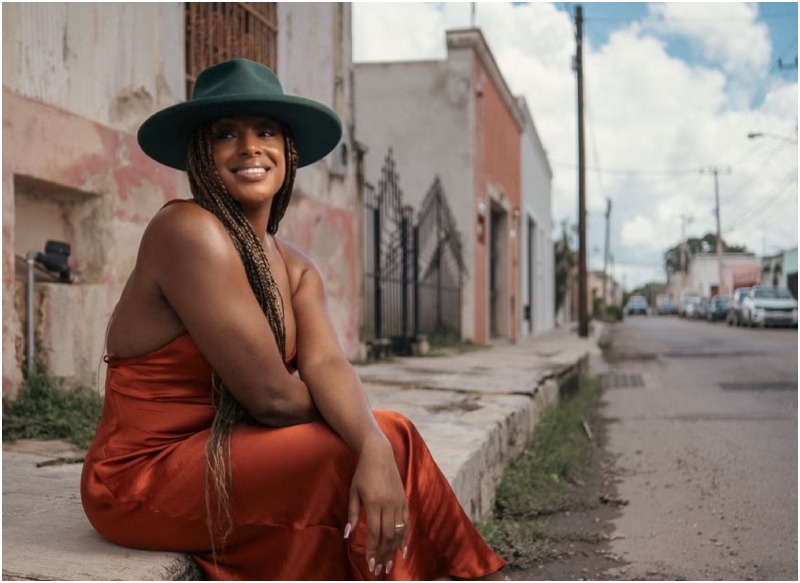
Clear Eyes Abroad
Neither Clahar nor Wright romanticizes expatriation. France operates under a “color-blind” legal framework that avoids racial data collection—a policy critics say erases the realities of ongoing discrimination against Black and Muslim residents. Portugal’s government tracks little racial data, making structural inequities harder to address.
“I know that Black French people face their own challenges,” Clahar said. “I’m clear-eyed about that.”
Wright cautions that the “why” of relocation must be strong enough to endure bureaucracy, language barriers, and the loneliness of rebuilding community from scratch.
“Once the rose-colored glasses come off, you’re still an immigrant navigating a system that wasn’t built for you,” she said. “But if you’re grounded in purpose, you’ll find your way.”
Running Toward
Baker performed for the last time in 1975, just days before her death. The reviews were rapturous. She had spent five decades proving that genius, when denied a stage, will build one elsewhere.
Today, a new generation is doing the same.
“I’m not running away,” Clahar said. “I’m running toward the life I want—one where I can breathe, create, and just be.”
Josephine Baker once said she wanted to give Black culture greater visibility on the world stage. She could not have known that nearly a century later, Black Americans would still be seeking that visibility—or that the route to finding it would look so much like her own.
The stages have changed. The reasons have not.

