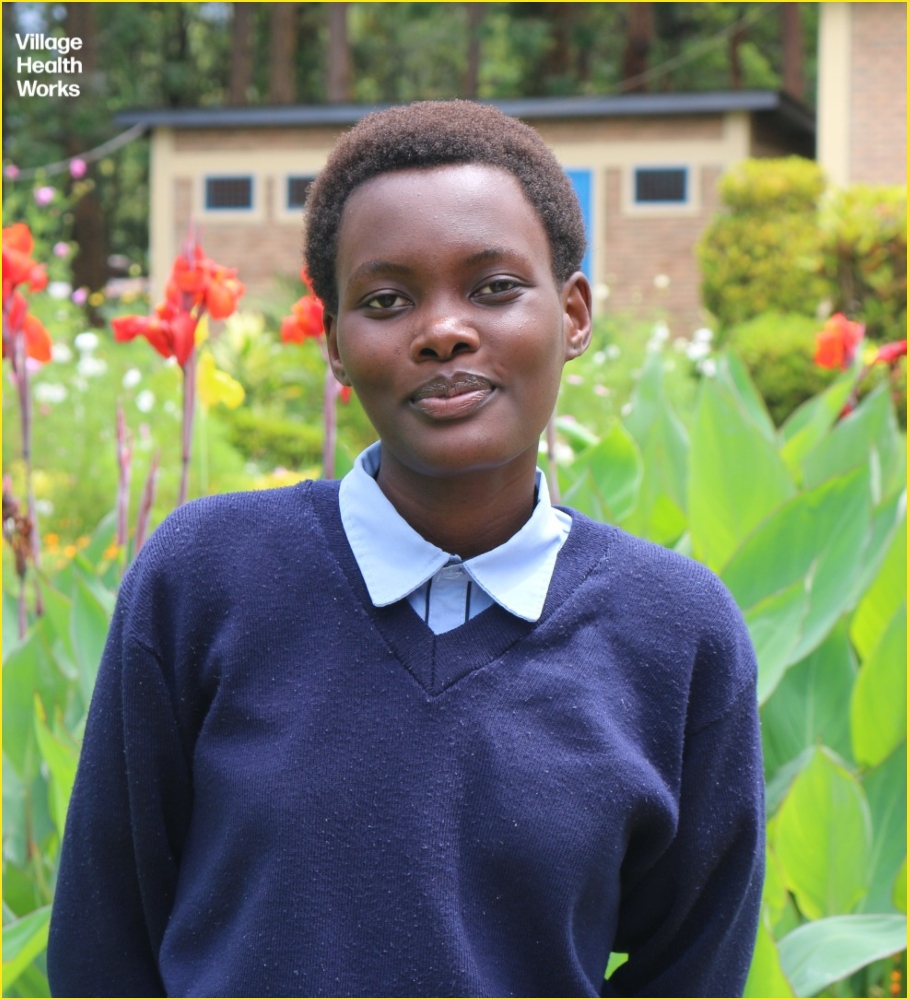
When Marie Gaëlla Dushime, a gifted student from Burundi, opened her Harvard University acceptance letter in December 2024, she didn’t just become another Ivy League admit. She became a national symbol of possibility. Her country celebrated. Local media amplified her victory. Schools held her up as a model of what brilliance from a small East African nation can achieve.
And then—within months and without warning—that dream collapsed.
In an emotional appearance on The ReidOut with Joy Reid, the 18-year-old recounted how a new U.S. travel ban abruptly barred her from entering the country, despite already having an approved, stamped student visa.
The policy, enacted under the Trump administration and framed as a measure targeting countries with high visa-overstay rates, included Burundi on its list. Overnight, Dushime went from Harvard-bound scholar to a student stranded in her boarding school dorm, refreshing embassy email updates that never came.
“I thought my dreams weren’t valid,” she said quietly. “Because I was from a poor or underrepresented country, I couldn’t achieve one of my biggest dreams.”
A Nation Celebrates — Then Falls Silent
Dushime’s acceptance was such a profound moment that social media in Burundi lit up with praise. For a nation with limited representation in elite global institutions, her admission felt like an international victory.
But when the travel ban hit, the government stayed largely silent. Ministries she contacted told her they couldn’t intervene. Other Burundian students were also affected, but none received coordinated support.
“It’s not a very active political system,” she said. “We weren’t really represented.”
A Bureaucratic Nightmare
The details of how Dushime found out are almost cruel in their simplicity.
- Her visa was fully approved.
- Her passport was still at the embassy.
- A string of holidays forced the embassy to close.
- By the time it reopened, the travel ban had gone into effect — and her visa was void.
No explanation. No guidance. Just a short email informing her that she was now prohibited from entering the United States.
She tried to learn more on her own, digging through policy documents to understand how she went from Harvard-bound scholar to collateral damage.
A Policy That Punishes Potential
The ban targeted several predominantly non-white countries. In Burundi’s case, U.S. officials cited high rates of student-visa overstays. But the implication—that all Burundian students should be treated as potential violators—stung.
“In some ways you can understand the reasoning,” Dushime said. “But in other ways, it felt like they were saying all of us want to overstay. That’s not true.”
Her own plans had never included remaining in the U.S. She aspired to study mathematics or computer science, then return home to strengthen Burundi’s fragile education sector. She was inspired by a Burundian Harvard alum who returned to build hospitals and fund scholarships—including the one that paid for her own high-school education.
“That’s what I wanted to do too,” she said. “Overstaying was never in my plan.”
Picking Up the Pieces
After the ban, Dushime had to grieve her lost opportunity alone. She was in boarding school, preparing for national exams, far from home and family support.
“It was really devastating,” she said. “Everyone else was focused on their studies. I had to deal with it by myself.”
Now, she’s refocusing. Applying to universities in Europe, Africa, and anywhere else that will open its doors. Doing community work in Burundi. Still holding onto the dream of transforming her country’s education system.
“Harvard was one door,” she said. “There are many others.”
The Human Cost of Policy
Dushime’s story is a stark reminder that geopolitical decisions are not abstract. They land on real people — often young people striving to change their countries, not escape them.
Her experience exposes a deeper truth that international students from vulnerable nations know all too well: opportunity can be offered and rescinded with the stroke of a pen.
But her determination—and the grace with which she speaks about a system that failed her—suggest a resilience that no travel ban can extinguish.
As Joy Reid told her at the end of the interview:
“Any country wise enough to admit you will be blessed to have you.”