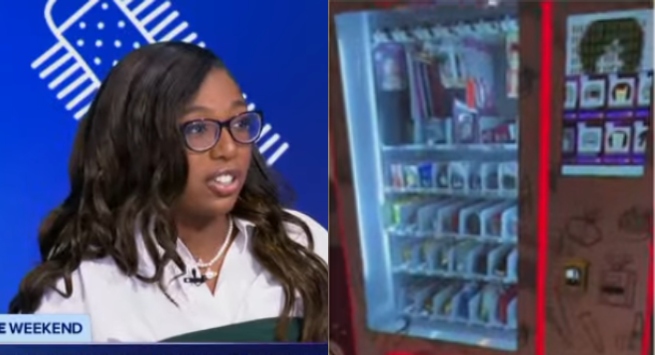
When Tania Spearman first arrived on her college campus, she noticed something most others didn’t: a quiet absence.
The shelves in nearby stores were lined with shampoo, conditioner, and styling products — but not the kind she or many other Black students needed. What started as frustration soon became a mission to create change.
That mission led to Hello Beauty, a line of vending machines designed to bring Black hair and beauty products directly to college campuses. From edge control to bonnets and curl cream, Spearman’s machines provide essentials that, until now, were missing from student life.
“This is what vision, creativity, and empowerment look like!” commented Attorney Ben Crump, applauding the young entrepreneur’s innovation.
From Pitch to Purpose
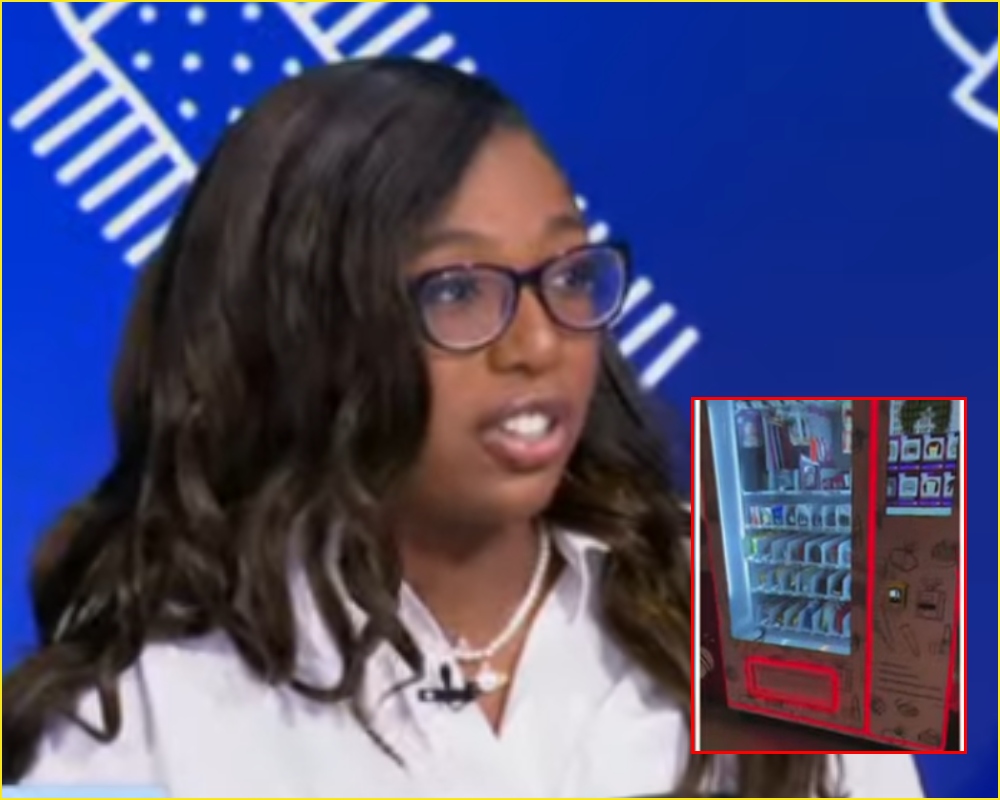
In an interview with ABC News Weekend Live, the determined college student recounted how the idea took shape out of necessity.
“Our nearest beauty supply store was about 40 minutes away,” she explained. “For students with busy schedules and no cars, it made something as simple as self-care almost impossible.”
At just 20, Spearman entered a campus pitch competition to propose her idea — but she didn’t win. Many would have given up. Instead, she came back the following year, refined her business plan, and tried again.
With the guidance of mentors at the Small Business Development Center (SBDC), she learned how to register an LLC, apply for funding, and build a business from scratch.
“I didn’t know what an LLC was. I didn’t know the amount of paperwork and patience it would take,” Spearman said. “But step by step, I got there.”
Now, Hello Beauty operates on three college campuses across New York, with plans to expand nationwide.
Redefining Access and Representation
For Black students attending predominantly white institutions (PWIs), the presence of these vending machines is about more than convenience — it’s about visibility. “If you’re going to schools that don’t necessarily know what you need,” Spearman said, “this brings the service to you. It helps campuses become more inclusive in ways that matter.”
The initiative reflects a broader issue within the retail and beauty industries: the chronic underrepresentation of products for textured hair and melanin-rich skin. In recent years, major retailers like Target and Walmart have made strides toward inclusivity, but college campuses — often isolated, understocked, and disconnected from urban centers — remain behind.
Spearman’s innovation bridges that gap. It’s not just about vending machines — it’s about normalizing diversity in every space where young adults live and learn.

The Price of Passion
Despite her growing success, Spearman admits the journey wasn’t glamorous. For years, she juggled full-time coursework, part-time jobs, and the emotional weight of starting a business on limited funds.
“There’s only 24 hours in a day,” she said with a laugh. “I was trying to do everything — work full-time, run a business, take care of my mental health, and spend time with my family. It just wasn’t sustainable.”
Her takeaway? Focus and boundaries.
“You can’t go 24/7,” she reflected. “Have one goal, stick to it, and the rest will come.”
It’s a lesson that resonates beyond entrepreneurship — a reminder that balance, not burnout, builds success.
Commentary: When Innovation Becomes Activism
Spearman’s story isn’t just about hair — it’s about equity. By addressing a simple yet overlooked problem, she’s highlighted how systemic exclusion can show up in the smallest details of daily life.
Hair, in Black culture, has always been more than aesthetic — it’s identity, heritage, and pride. The absence of Black hair care products in shared spaces is not accidental; it’s an echo of the long history of invisibility that Black women have fought to overcome.
Through her vending machines, Spearman has transformed that absence into empowerment. Each time a student swipes their card for a product that finally meets their needs, they’re engaging in quiet resistance — affirming that they, too, belong.
Her work stands as a reminder that representation doesn’t have to come from the top down. Sometimes, it starts with one young woman, a vending machine, and a refusal to accept that being overlooked is normal.