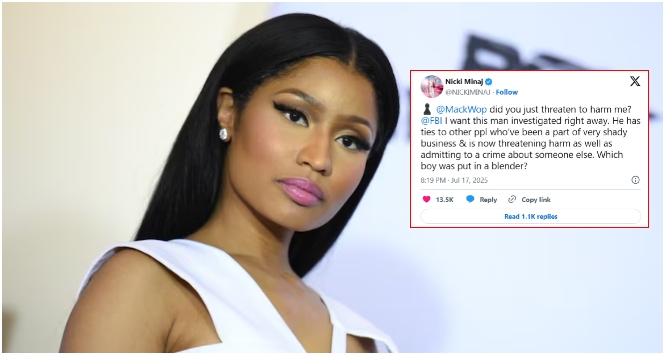
The escalating war of words between superstar Nicki Minaj and R&B artist SZA has taken a serious turn, as Minaj now alleges she was threatened by a Top Dawg Entertainment (TDE) affiliate—and she’s turned to federal authorities and a sitting U.S. congresswoman for protection.
In a series of fiery posts to X (formerly Twitter), the 42-year-old rap icon named MackWop, a TDE affiliate and popular livestreamer, as the source of what she views as a credible threat. The remark in question, made during a livestream, was:
“Nicki, relax. Relax before you get put in the blender like your boy did.”
Minaj interpreted that as a reference to the recent Drake-Kendrick Lamar feud and possibly a threat of physical harm. She quickly posted:
“Is this a threat? @FBI”
“@MackWop did you just threaten to harm me? @FBI want this man investigated right away.”
She further alleged that MackWop “has ties to other ppl who’ve been a part of very shady business” and asked federal agents to take his comments seriously.
A Congressman Gets Involved
Minaj didn’t stop there. She reached out to Florida Congresswoman Anna Paulina Luna, who promptly responded:
“Please text my cell, I will forward this to law enforcement immediately. Threats of violence and assassination should be taken very seriously.”
The unprecedented move places a sitting member of Congress at the center of an internet-fueled celebrity feud, raising real questions about how online threats involving public figures are investigated and handled under federal law.
Legal Implications: A Threat or Just Free Speech?
Legal experts say Minaj’s public referral of MackWop to the FBI places this incident squarely within the gray zone of cyberthreat jurisprudence.
While First Amendment protections shield a broad range of online speech, credible threats of violence—especially those that imply physical harm—can fall under scrutiny by federal and state authorities under laws such as 18 U.S.C. § 875(c), which prohibits transmitting threats in interstate or foreign commerce.
But proving intent to threaten is a high bar.
“It’s one thing to post a tasteless joke,” said a former federal prosecutor. “But once a person believes the message is a true threat and not hyperbole, the government may take a closer look, especially when public figures are involved.”
The Origin: SZA, Punch, and Freckle Shade
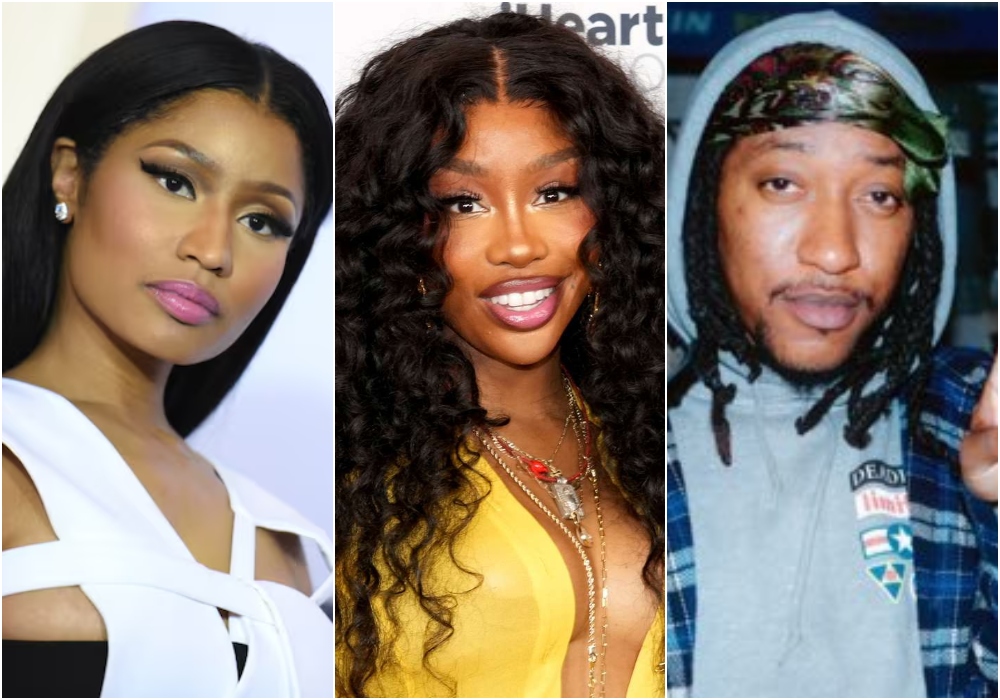
What began as a spat involving Terrence “Punch” Henderson, TDE’s president and SZA’s manager, who Minaj accused of “bullying,” has now unraveled into a full-on public spectacle. SZA seemingly defused the drama with a light “don’t take the bait” tweet, but Minaj fired back with venom:
“Go draw your freckles back on bookie.”
“Looking & sounding like she got stung by a bee.”
The online clash has only escalated, with the Barbz—Minaj’s fanbase—jumping in full force and the rapper now claiming that Drake originally wanted her and Sexxy Red, not SZA, on “Rich Baby Daddy.”
A Dangerous Digital Landscape
As online fan wars, celebrity disputes, and livestream commentary increasingly blur the lines between opinion and intimidation, legal boundaries remain murky. In this case, the involvement of federal agencies and lawmakers has raised the stakes, potentially setting precedent for how artists use digital platforms to document threats and seek protection.
It remains unclear whether the FBI has opened a formal investigation into MackWop’s comment, but Minaj’s public call for action signals a new front in how high-profile individuals are leveraging public institutions in the battle for digital safety.