- Date of Birth: September 25, 1952
- Place of Birth: Hopkinsville, Kentucky
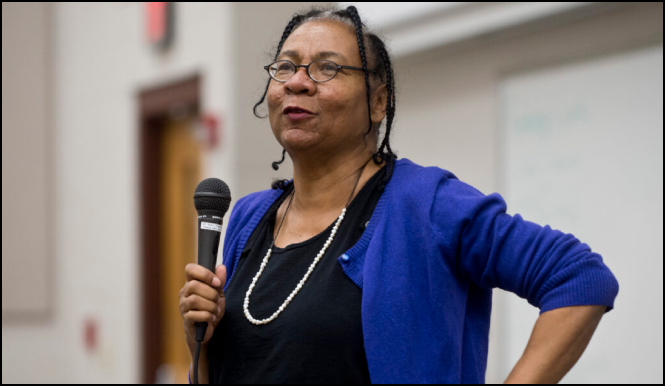
bell hooks (stylized in lowercase) was the pen name of Gloria Jean Watkins (September 25, 1952 – December 15, 2021), an influential American author, philosopher, educator, feminist theorist, cultural critic, and social activist.
She was a Distinguished Professor in Residence at Berea College in Kentucky and a foundational thinker in intersectional feminism.
Her work examined the intersections of race, gender, class, capitalism, and sexuality, highlighting how these systems perpetuate oppression and domination, particularly for Black women. She authored nearly 40 books spanning scholarly essays, poetry, memoirs, cultural criticism, and children’s literature.
Early Life
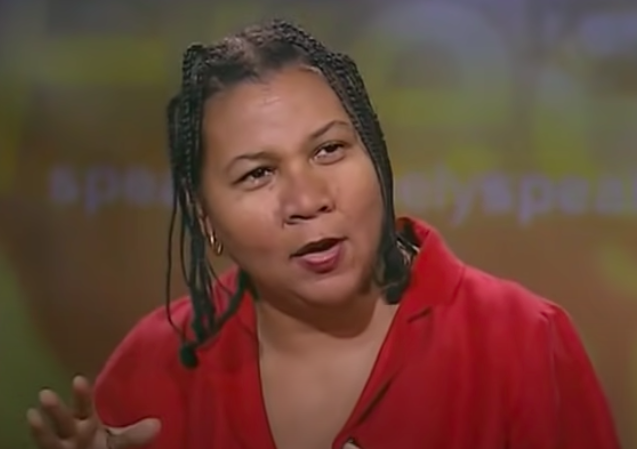
Born to a working-class African American family in segregated Hopkinsville, Kentucky, hooks was one of six children of Rosa Bell (née Oldham) and Veodis Watkins. Her father worked as a janitor, and her mother as a maid.
Growing up in the rich yet sometimes terrifying world of Southern Black culture, she developed a love for reading and poetry (favorites included Langston Hughes, Gwendolyn Brooks, and Elizabeth Barrett Browning). She attended racially segregated schools before moving to integrated ones, an experience that shaped her views on education. She graduated from Hopkinsville High School, earned a B.A. in English from Stanford University (1973), an M.A. from the University of Wisconsin–Madison (1976), and a Ph.D. in literature from the University of California, Santa Cruz (1983), with a dissertation on Toni Morrison.
Career and Major Works
hooks began teaching English and ethnic studies at the University of Southern California in 1976. She later held positions at Stanford, Yale, Oberlin College, City College of New York, and other institutions before joining Berea College in 2004. In 2014, she founded the bell hooks Institute at Berea to preserve her legacy and promote feminist scholarship and activism.
She also established the bell hooks Center to support underrepresented students (especially Black, brown, femme, queer, and Appalachian individuals).
Her seminal 1981 book Ain’t I a Woman? Black Women and Feminism (written at age 19) critiqued the historical devaluation of Black womanhood, white feminist racism, and the interlocking effects of sexism and racism. Key subsequent works include Feminist Theory: From Margin to Center (1984), Teaching to Transgress: Education as the Practice of Freedom (1994), All About Love: New Visions (1999), Black Looks: Race and Representation (1992), and We Real Cool: Black Men and Masculinity (2004). She emphasized “engaged pedagogy,” love as a transformative ethic, and critiques of patriarchal structures, media, and capitalism. Influenced by Sojourner Truth, Paulo Freire, Thích Nhất Hạnh, and others, she blended Buddhist insights with her Christian upbringing.
hooks used lowercase for her pen name (taken from her great-grandmother Bell Blair Hooks) to shift focus from her personality to her ideas. She described herself as “queer-pas-gay” and was celibate for many years later in life. She died of kidney failure in Berea, Kentucky, at age 69.
Official Links and Social Media
- Websites: bell hooks Institute / Digital Archive / bell hooks Center
- Official Books Site: bell hooks books
- Instagram (fan/official-style account): Bell Hooks @bellhooks_ (African American Feminist, Educator, Activist & Writer)
- Facebook Fan Page: Bell Hooks
Her papers are archived at Berea College.