
Texas Congresswoman Rep. Jasmine Crockett (D-TX) has found herself at the center of a fiery debate after ESPN personality Stephen A. Smith publicly criticized her outspoken style and relentless commentary on President Donald Trump.
Smith’s critical comments also sparked a wider conversation about how Black women are treated when they speak unapologetically in public life. His remarks, made during an episode of his SiriusXM show Straight Shooter with Stephen A., quickly went viral. The veteran commentator questioned whether Crockett’s bold political persona was productive, asking rhetorically,
“How Jasmine Crockett chooses to express herself, I’m like, ‘Is that gonna help your district in Texas?’ Aren’t you there to find a way to get stuff done, as opposed to just being an impediment to what Trump wants?,’” Smith had said.
What followed was an avalanche of backlash from Crockett’s supporters, fellow Black women, and even hip-hop icons — many accusing Smith of perpetuating a tired pattern: criticizing confident, vocal Black women while overlooking their substance.
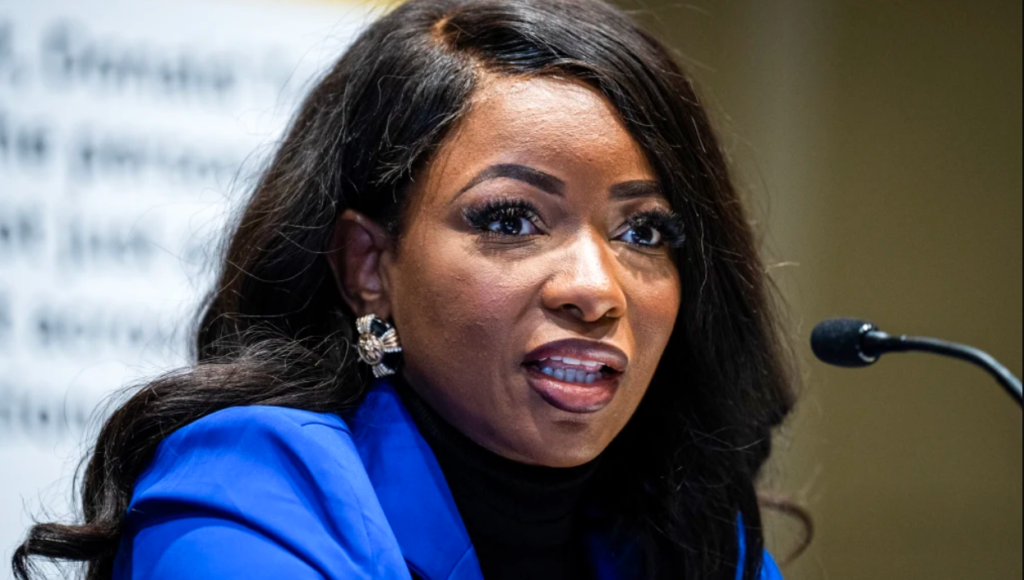
Crockett’s Subtle Clapback
Rather than issuing a direct statement, Crockett — known for her sharp wit and composure — let her retweets do the talking. She reposted comments from activist Tamika Mallory, who called out what she described as Smith’s “intentional targeting” of Black women.
“It’s no longer a difference of opinion. Stephen A. Smith’s actions are intentional,” Mallory wrote, tagging Crockett. “At what point will you lead the charge to TURN HIM OFF?!”
The Congresswoman also amplified voices from within the culture who came to her defense, using social media as both shield and sword — a reminder of how digital spaces have become the new battlegrounds for identity, power, and perception in American politics.
Culture Clash: Smith vs. His Critics
Smith, a seasoned broadcaster long known for his confrontational sports analysis, has increasingly crossed into political commentary. But his tone toward Crockett — and toward other high-profile Black women — drew accusations of hypocrisy and self-hate.
On the Native Land Pod, hosts Angela Rye, Andrew Gillum, and Tiffany Cross criticized Smith in unusually direct terms, accusing him of harboring “Black woman issues.”
“He needs to deal with his Black woman issues,” Gillum said. “I’ve never seen a clip of him where he actually praises a Black woman.”
Even rapper Willie D of the Geto Boys, a Houston legend and respected voice in Crockett’s home state, took Smith to task, calling his comments “weak and messy.”
“Instead of using that massive platform to uplift, he’s tearing down a Black woman who’s putting in real work,” Willie D wrote. “That ain’t critique — that’s betrayal.”
Smith Pushes Back: ‘I Won’t Be Canceled’

Facing mounting criticism, Smith dedicated an entire 40-minute episode of Straight Shooter to defending himself.
“The one thing that will never happen,” he declared, “I will never succumb to, I will never surrender to, is somebody intimidating and trying to rally folks against me to quell what I have to say. Bump that. I ain’t built that way.”
Still, Smith struck a somewhat conciliatory note toward Crockett herself, acknowledging her intelligence and passion — but urging her to “walk across the aisle” to work with her political opponents.
“Facts are facts: Jasmine Crockett’s heart’s in the right place,” he said. “But at some point, you got to deal with people you don’t want to deal with to get things done.”
Smith dismissed what he called “shameful” calls to cancel him, insisting he won’t back down or silence himself.
“Everybody has their thoughts and opinions. But to rally for me to be canceled? That’s immature,” he said.
The Larger Battle Over Black Women’s Expression
This exchange — part political dust-up, part cultural moment — resonates far beyond social media. It’s emblematic of a broader tension Black women in public life continually face: how to be assertive without being labeled “angry,” how to speak truth to power without being dismissed as divisive.
Crockett, a former civil rights attorney, has built her reputation on precisely that balance — wielding intellect, humor, and fearlessness to challenge Trump-aligned narratives and defend democracy from what she views as creeping authoritarianism. Her supporters argue that her voice is not just needed but necessary.
Political analysts note that the dust-up also reflects a generational divide: where older media figures like Smith prize decorum and bipartisanship, younger progressives like Crockett prioritize authenticity and confrontation in the face of what they view as existential political threats.
“What we’re witnessing is a shift in what leadership looks like,” one communications expert told ShineMyCrown. “Crockett represents a new era of unapologetic Black female leadership — unfiltered, visible, and unwilling to make herself smaller to make others comfortable.”
At its core, the Crockett–Smith clash isn’t just about tone or political style. It’s about representation, power, and who gets to define professionalism in the public square.
Whether one agrees with Smith or Crockett, the conversation they’ve ignited is part of a much larger cultural reckoning — one that demands the same question be asked of every institution, from politics to media: Who gets to speak loudly, and who pays the price for doing so?


