
A growing wave of online activism and public concern is drawing attention to violence against Black women—particularly in intimate relationships involving a white man and a Black woman.
This is after the recent mysterious death of beloved influencer Ashlee Jenae brought attention to several previous high-profile cases.
Now, many people online are saying there is a clear pattern that has been overlooked for many years.
“We are noticing a trend here. It’s actually worrying and we can’t continue to ignore it,” one widely shared sentiment reads, echoing calls for deeper scrutiny into how such cases are investigated, reported, and understood.
While each case remains legally and factually distinct, many Americans, particularly Black women, on social media say the cumulative impact is forcing a difficult but necessary conversation about race, gender, and vulnerability in intimate partner violence.
Death of Ashlee Jenae
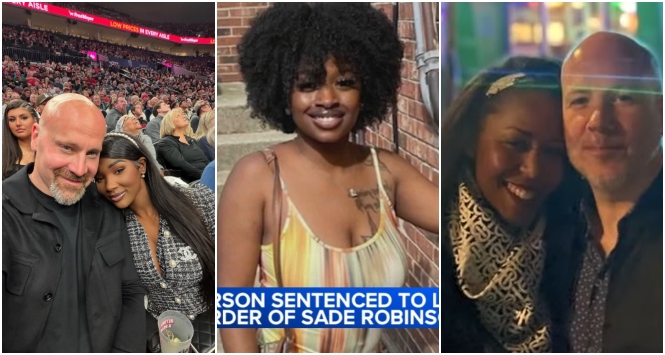
The death of U.S.-based influencer Ashlee Jenae in Tanzania remains under investigation, but it is perhaps the most bizarre and baffling. Initial reports from authorities cited hanging, but her family and supporters have publicly disputed that account and are calling for a transparent inquiry.
While no charges have been filed, the case has gained international attention and is what has fueled the broader online discussions about the safety of Black women who are in an intimate relationship with white men.
Previous Cases
Milwaukee, Wisconsin: Death of Sade Robinson

One of the most widely reported recent cases involves 19-year-old Sade Robinson, who was killed after meeting a man for a first date in April 2024.
Prosecutors allege that Maxwell Anderson, a white man, is responsible for her death, which involved dismemberment and has shocked the nation.
The case drew widespread media attention and renewed concerns about safety in modern dating environments.
Australia: Killing of Natalina Angok

In Melbourne, Christopher Bell was convicted over the killing of his partner Natalina Angok in 2020.
Though not recent, the case is frequently cited in ongoing discussions about violence against Black women in interracial relationships.
Kentucky: Husband Convicted of Felony Murder

In 2025, a Kentucky jury found Jordan Mykol Henning, 34, guilty of first-degree felony murder for the shooting death of his wife, Ashley Henning, 32. The conviction came after a trial that exposed a volatile relationship. Ashley’s family has said they warned authorities about her husband’s behavior before the killing. The question remains: why wasn’t more done to protect her?
Dallas, Texas: Man Accused of Killing Wife Married Over the Phone

Investigators say Jeannean Chapman, 46, was found dead inside an apartment at The National on Elm Street on a Monday afternoon.
Her family told reporters that the suspect—a non-offending (white) boyfriend who had recently married her over the phone—is now in custody in Austin.
The case raises urgent questions about how such relationships are vetted and what protections exist for women in non-traditional or long-distance unions.
What the Data Shows
While experts caution against drawing sweeping conclusions from individual cases alone, available research confirms that Black women face disproportionately high rates of intimate partner violence.
According to organizations such as the National Coalition Against Domestic Violence, Black women in the United States experience domestic violence at higher rates than many other demographic groups.
Structural inequalities, economic barriers, and limited access to resources are often cited as contributing factors. Racism has also been cited as a factor in these senseless acts of violence against Black women.
Although most intimate partner violence occurs within the same racial group, according to criminological data, advocates argue that all forms of violence against Black women—regardless of perpetrator—deserve more consistent attention and protection.
Calls for Accountability and Better Data
Advocates and researchers are now pushing for:
- Improved national data collection on intimate partner violence, including clearer breakdowns by race and gender
- Stronger prevention strategies and early intervention systems
- More consistent media coverage that avoids sensationalism while highlighting systemic risks
- Expanded support services tailored to vulnerable communities
Some are also calling for deeper analysis of how race, gender dynamics, and power imbalances intersect in cases of domestic violence.
A Broader Conversation
While social media discussions following the mysterious death of Jenae have triggered a conversation that sees violence against Black women as part of a specific pattern, authorities are urging careful, evidence-based analysis.
What remains undisputed, however, is the urgency of addressing violence against Black women as a public health and safety issue.
Each case—whether in Milwaukee, Tanzania, or Melbourne—represents not just a headline, but a life lost and a family seeking justice.
The Question Moving Forward
As conversations continue, one question is increasingly being asked:
Are existing systems doing enough to protect Black women from violence—especially in intimate settings?
For many advocates, the answer is clear: more attention, more research, and more action are urgently needed.
If you or someone you know is experiencing domestic violence, contact a local support service or a trusted organization for help. Resources are available globally to provide confidential support and assistance.

