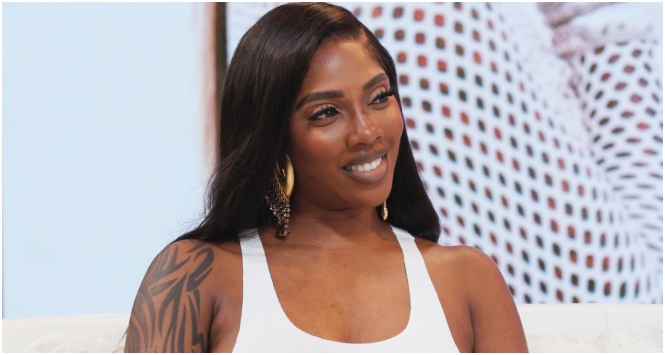
Nigerian music powerhouse Tiwa Savage has never been one to mince words — but her latest revelation on the Lip Service podcast has triggered a wave of online debate over modern relationships, cultural expectations, and the evolving dynamics of love and marriage.
During a candid conversation with hosts and fellow guests, the Afrobeats star openly admitted she would be comfortable being a second wife, explaining that her lifestyle and personality make her well-suited for such an arrangement.
“I’m very respectful,” Tiwa said with a laugh. “I’d know she’s the first wife. She wouldn’t have a problem with me because I’d hardly be home — I’d be on tour most of the time.”
Her remarks immediately went viral, fueling heated discussions across social media about polygamy, independence, and women’s agency in both African and global contexts.
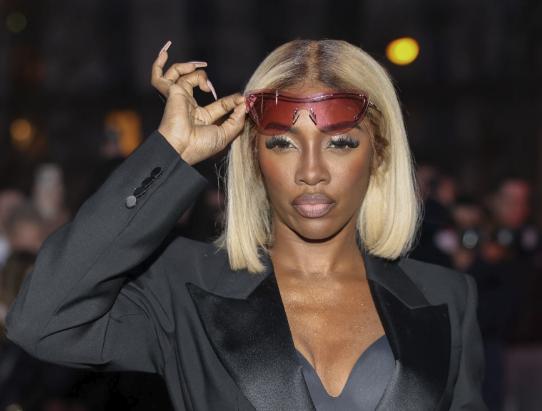
For many listeners, Tiwa’s tone was lighthearted, even humorous. But beneath the laughter lies a strikingly honest commentary on the complex realities of dating as a successful, high-profile woman.
Tiwa explained that at this stage in her life, most of the men she meets are “either in their 50s or already married.” Rather than view that as a dead end, she half-joked that joining an established household might be simpler — especially since, as she put it, “they’re pre-trained.”
Her point? Life on the road as an international performer doesn’t always align neatly with conventional expectations of marriage and domestic life. Between world tours, award shows, and brand deals, Tiwa Savage is often in motion — and she knows it.
“I’m not really going to stress,” she said. “She [the first wife] could even come to the show.”
Reactions: Between Outrage and Understanding
The public response has been sharply divided. Some critics accused the singer of normalizing polygamy and undermining traditional values about marriage. Others praised her for her candor and self-awareness, arguing that her remarks highlight the importance of allowing women to define their own happiness — even if it challenges cultural norms.
One social commentator wrote that Tiwa’s statement “reflects the contradictions of modern womanhood — powerful, independent, yet still negotiating space within patriarchal expectations.”
Another on instagram said, “What works for others it’s all up to them.”
In much of Nigeria, polygamy remains legal and culturally accepted under certain religious and customary frameworks. But for many women, especially those in urban or Westernized circles, the practice evokes feelings of inequality or emotional displacement.
Tiwa’s openness about “knowing her place” struck a nerve precisely because it sits at the intersection of feminism and traditionalism — two worlds that often collide.
The Larger Conversation: Redefining Relationships
What makes this story more than a celebrity soundbite is what it reveals about changing perceptions of love, loyalty, and independence in an era when global success can complicate intimacy.
Tiwa Savage, who has long been celebrated for her artistry and resilience — from navigating a public divorce to breaking boundaries in the male-dominated Afrobeats scene — has once again forced audiences to confront uncomfortable truths.
Her comment wasn’t a plea for polygamy, some argue, but rather a reflection of a woman negotiating her personal desires with her public image. She’s not asking to be rescued or idealized — she’s defining her terms.
As she put it herself during the podcast:
“I feel like a lot of women are going to have a problem with me saying that. But people have to understand — there are all kinds of relationships that people are okay with. It’s about individual choice.”
The Price of Honesty
For a generation of women redefining success and family on their own terms, Tiwa’s words — controversial as they may be — resonate. She’s confronting a reality few celebrities dare to admit: that power, fame, and freedom can coexist with unconventional love.
And perhaps, that’s exactly what makes her statement so provocative. Not that she’d be a second wife — but that she’d do it on her own terms.