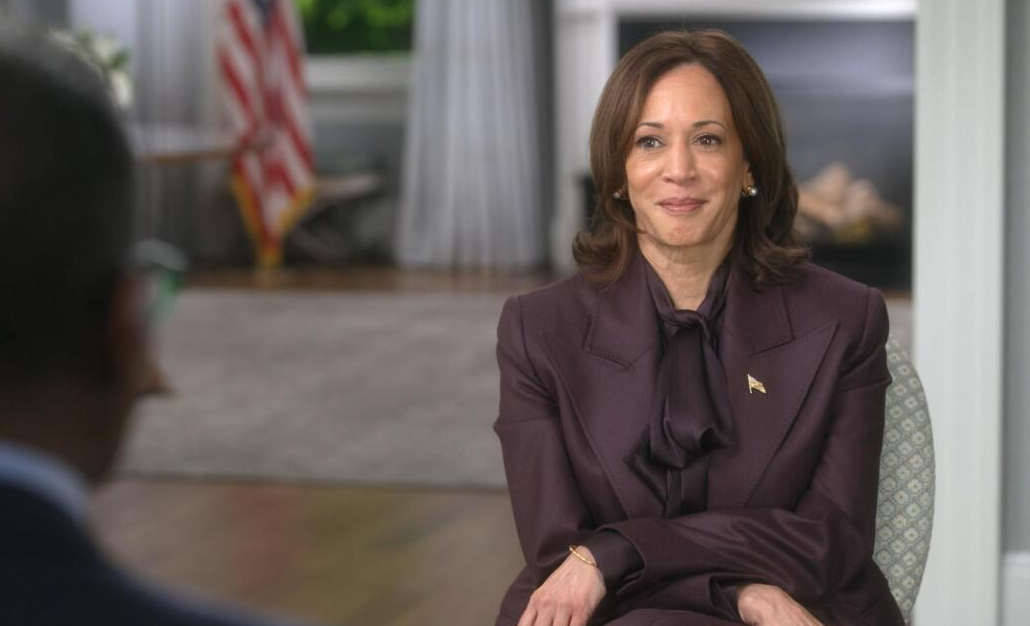
Nearly a year after her defeat, Kamala Harris is back in public view — but not yet back in campaign mode. On a national book tour that has filled theaters across the country, the former vice president insists she is focused on telling her story, not plotting her political future. Asked recently about another presidential run, she waved off the question. “It’s three years from now,” she said, a familiar mix of humor and deflection returning to form.
Defeat hit Harris hard. She has spoken openly about retreating from public life in the early months after the election, processing loss away from the spotlight. Friends now say she is lighter, looser, even swearing more freely in long-form interviews she once avoided. She calls the moment her “freedom tour” — a period unburdened by the constant transactions of campaigning.
Yet the politics have never fully stopped. While she passed on a widely anticipated bid for governor of California, Harris quietly reassembled parts of her political operation. A new political action committee is up and running. She has re-engaged with party leaders and newly elected officials, making dozens of congratulatory calls after the last election — exactly the kind of relationship-building that keeps a national profile alive. She has also launched a broad nonprofit focused on economic opportunity and fundamental freedoms.
Onstage and in interviews, Harris remains cautious, lawyerly. She has offered only limited second-guessing of past strategy, while acknowledging she wishes she had simply had “more days” in the 2024 race. Publicly, she sidesteps internal party battles, even as Democrats argue over centrism, populism and the party’s future direction. Her own ideological pitch remains elusive, though she speaks often about trust, misinformation, technology and the disillusionment of young people.
Crowds still come. Thousands line up to see her, paying to hear her reflect on power, loss and the state of American democracy. Black voters and women remain her most passionate constituencies, and her stops at historically Black colleges and in the South have drawn especially electric receptions.
Still, Harris stands at a crossroads. To some in the party, she symbolizes a painful recent defeat. To others, she remains a proven fundraiser, a compelling speaker and a historic figure with unfinished business. For now, she is listening more than she is declaring. Whether that listening leads her back onto the national ballot remains the unanswered question at the center of her return to the public stage.
Former Vice President Kamala Harris has remained firmly in the national spotlight in 2025 as she promoted her post-2024 election memoir, 107 Days, a candid reflection on her historic run for the White House and her years at the pinnacle of American politics. The book tour, marked by sold-out venues and strong sales, has underscored that public interest in Harris has hardly faded following her defeat to President Donald Trump last fall.
In a recent profile with The New York Times, Harris addressed speculation about whether she will seek the presidency again in 2028, signaling both confidence in her legacy and patience about her next move. “I understand the focus on ’28 and all that,” she said. “But there will be a marble bust of me in Congress. I am a historic figure like any vice president of the United States ever was.”
At 61, Harris’s résumé is already one of the most groundbreaking in modern American politics. Over a four-decade career, she served as San Francisco district attorney, California attorney general, U.S. senator, and vice president—frequently as the first woman, the first Black woman, or the first South Asian woman to hold each office. That historic ascent culminated in her 2024 campaign to become the nation’s first female president, an effort that ultimately fell short.
Still, Harris has not been ruled out as a future contender. Many Democrats view her loss as shaped by unprecedented political circumstances rather than a rejection of her leadership. Dallas Jones, a Democratic strategist who worked on the Biden-Harris 2020 campaign, argued that structural challenges constrained her run. “If Kamala Harris would have had more time, her own infrastructure, her own people, we would have seen a different result,” he said.
Harris herself pointed to tangible signs of public engagement in the Times interview, noting that voters continue to pack event halls across the country. “Thousands of people are coming to hear my voice,” she said. “Every place we’ve gone has been sold out.”
The Times also reported that Harris is unfazed by the growing list of potential Democratic rivals for 2028, with aides suggesting she feels no urgency to decide her political future.
Her defeat has renewed broader conversations about gender in American politics. Former First Lady Michelle Obama recently remarked that Harris’s loss reflected lingering resistance to female leadership at the highest level. “We’ve got a lot of growing up to do,” Obama said.
Whether or not Harris runs again, her influence—and the debates her career continues to spark—remain a central force in the Democratic Party.