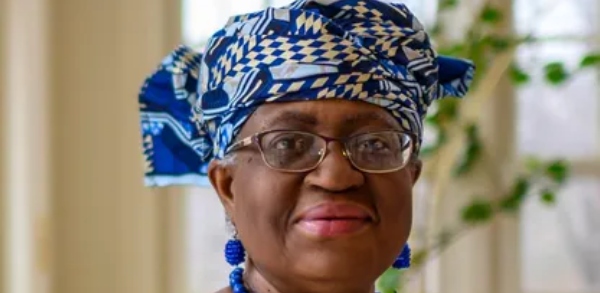
As the Trump administration doubles down on its crackdown on diversity programs, the WTO’s chief offers a powerful counterargument: excellence and inclusion were never mutually exclusive.
In a political moment when “merit” and “diversity” are being presented as opposing forces, Dr. Ngozi Okonjo-Iweala, the Director-General of the World Trade Organization, is offering a more nuanced—and perhaps more powerful—vision of leadership.
Speaking recently at an Atlantic Council event, Okonjo-Iweala delivered what observers are calling a masterclass in leadership philosophy, one that cuts directly to the heart of America’s raging debate over diversity, equity, and inclusion (DEI) programs.
“You cannot lead if you cannot listen,” she said. “A leader must have empathy. A leader must have courage. To lead, you need to have the courage of your convictions because leadership is not easy. And to lead, you must also be a good follower.”
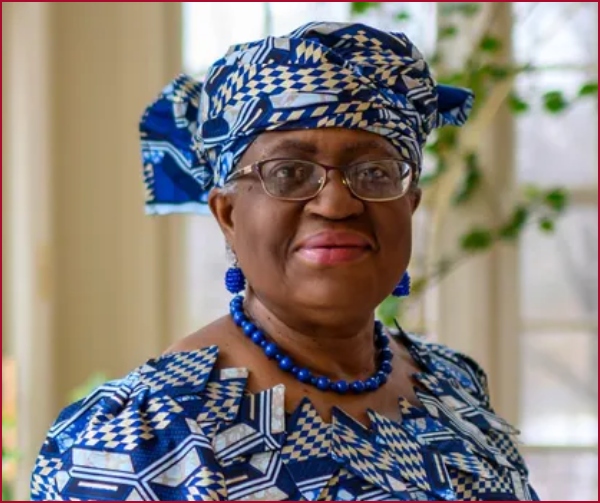
But it was her handling of the so-called “merit vs. diversity” debate that landed with particular resonance against the backdrop of Washington’s current political climate.
“Diversity and representation is critical,” Okonjo-Iweala continued. “You need to have all voices and all views in leadership positions because God made a diverse world and therefore we need to reflect that diversity. But I also insist on merit.”
She then posed the question that has become a flashpoint in American politics: “Does it mean that within a diverse world, you cannot find within each population those who are merit worthy?”
Her answer was unequivocal: “Of course you can find them. And therefore you can have both merit, diversity and representation. You can have excellence.”
The Washington Context: DEI Under Siege
Okonjo-Iweala’s words arrive at a moment when the very concept of diversity programming is under unprecedented assault in the United States.
Since returning to office in January 2025, President Donald Trump has issued multiple executive orders aimed at dismantling DEI initiatives across the federal government and beyond.
Executive Order 14151 ordered agencies to “terminate, to the maximum extent allowed by law, all ‘equity-related’ grants or contracts.” Executive Order 14173, titled “Ending Illegal Discrimination and Restoring Merit-Based Opportunity,” requires federal contractors to certify they do not operate DEI programs that violate anti-discrimination laws.
On Feb. 6, 2026, the U.S. Court of Appeals for the Fourth Circuit dealt a significant blow to DEI advocates, vacating a nationwide injunction that had temporarily blocked key provisions of these orders. The court found that plaintiffs had not met the standard required to prove the orders were facially unconstitutional.
The Department of Justice has since launched what it calls the Civil Rights Fraud Initiative, with officials signaling that DEI cases are receiving “expedited priority treatment.” Brenna Jenny, deputy assistant attorney general, recently outlined the DOJ’s focus on corporate practices that “pressured supervisors and management to make hiring and promotion decisions based on race or sex”—including demographic goal-setting and tying executive compensation to diversity metrics.
The Equal Employment Opportunity Commission has followed suit, announcing this month that it is seeking to compel a major national retailer to produce information about allegations it discriminated against white workers as part of its DEI initiatives. EEOC Chair Andrea Lucas stresses that Title VII is “colorblind” and that the agency is focused on “evenhanded enforcement”.
A Voice of Balance from the Global Stage
Against this polarized backdrop, Okonjo-Iweala’s message stands out for its refusal to accept false binaries.
Her own career embodies the synthesis she describes. The first woman and first African to lead the WTO, Okonjo-Iweala has spent decades navigating spaces “never designed with people like her in mind”.
She holds an undergraduate degree in economics from Harvard University, earned magna cum laude, and a Ph.D. in regional economics and development from MIT. Her 25-year career at the World Bank saw her rise to the number two position of Managing Director, overseeing an $81 billion operational portfolio.
As Nigeria’s finance minister, she led negotiations that secured the cancellation of $18 billion of Nigeria’s debt and introduced transparency reforms that strengthened institutions against corruption. She has been named one of the Top 100 Most Powerful Women in the World by Forbes multiple times and one of TIME’s 100 Most Influential People.
“She is a testament to the institution’s commitment to choosing the best fit for the job—irrespective of race, gender, or background—thereby reinforcing the importance of competence and vision over prejudice,” wrote Keith Mawanda in a LinkedIn reflection on her leadership.
The False Choice Fallacy
What makes Okonjo-Iweala’s perspective particularly relevant to the American debate is her insistence that merit and diversity are not competing goods but complementary ones.
The Trump administration’s executive orders frame DEI programs as inherently at odds with merit-based opportunity. The attorney general’s July 2025 guidance instructed federal agencies that entities receiving federal funds “must ensure that their programs and activities … do not discriminate on the basis of … protected characteristics—no matter the program’s labels, objectives, or intentions” . DEI programs are explicitly identified as among those “that may involve discriminatory practices”.
But Okonjo-Iweala challenges the underlying premise. The question, she suggests, is not whether to prioritize merit or diversity, but whether we are casting a wide enough net to find merit in all its forms.
In practical terms, this philosophy has translated into action. Under her leadership, the WTO collaborated with the International Trade Centre to create the Women Exporters in the Digital Economy (WEIDE) Fund, a $50 million initiative aimed at empowering women entrepreneurs to grow their businesses through international trade and digitalization.
The fund provides grants to women-led businesses in Nigeria, Mongolia, and the Dominican Republic—not as charity, but as investment in enterprises that demonstrate potential for growth and employment generation.
What Leadership Actually Requires
Beyond the diversity debate, Okonjo-Iweala’s broader reflections on leadership offer a counterpoint to the transactional view of power that often dominates political discourse.
“To lead, you must also be a good follower,” she said—a sentiment that might seem paradoxical in a culture that celebrates individual authority. Yet it reflects her observed leadership style, described by colleagues as “quiet yet unwavering strength,” “grounded in data, diplomacy, and deep conviction”.
Tee Bello, a student at Warwick Business School, wrote of Okonjo-Iweala during Black History Month: “Her leadership is not loud; it is grounded in data, diplomacy, and deep conviction. She navigates spaces that were never designed with people like her in mind, yet she stands tall, firm in her intellect, heritage, and identity. For me, she represents the type of power that transcends titles; the kind that is earned through competence, authenticity, and courage”.
The Path Forward
As the Fourth Circuit’s decision allows the Trump administration’s DEI-related orders to proceed, American companies and federal contractors face an uncertain landscape. The fear of False Claims Act litigation has already prompted a “huge shift in corporate policies,” according to Audrey Anderson, counsel at Bass, Berry & Sims. Employers are reviewing DEI programs, conducting audits, and consulting counsel to ensure compliance with shifting federal priorities.
Yet Okonjo-Iweala’s message suggests a path beyond the current polarization. The goal, she implies, is not to choose between excellence and inclusion but to insist on both—to recognize that a diverse world produces diverse talent, and that the task of leadership is to find it.
“Within a diverse world, you cannot find within each population those who are merit worthy?” she asked. “The answer is no. Of course you can find them.”
For American leaders navigating the current political crosswinds, the question may not be whether to heed that message, but how.