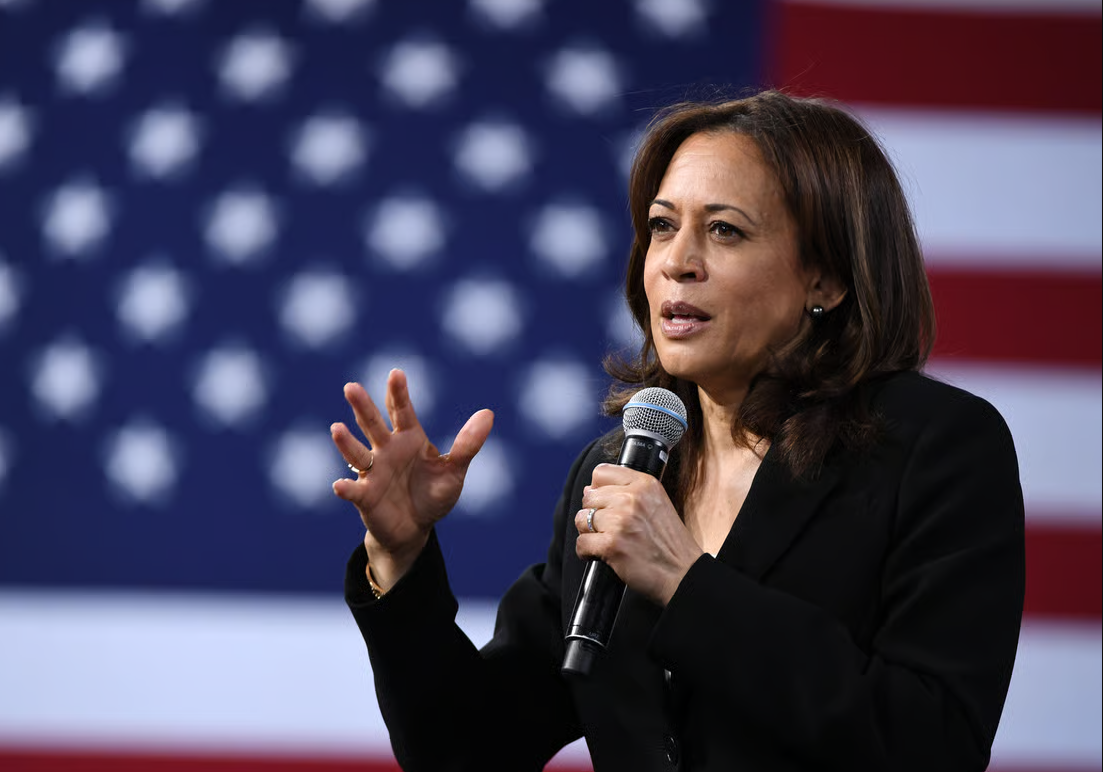
Date of Birth: October 20, 1964
Place of Birth: Oakland, California
She was not supposed to be first. Not the first woman. Not the first Black woman. Not the first South Asian American woman. But Kamala Devi Harris has spent her entire career proving that ceilings are not permanent—they are simply waiting for the right person to break through.
Born in Oakland, California, on October 20, 1964, Harris was raised by two immigrant parents who met as graduate students at the University of California, Berkeley. Her mother, Shyamala Gopalan Harris, was a Tamil Indian breast cancer researcher who arrived in the U.S. at 19. Her father, Donald Harris, is a Jamaican American economist who became the first Black scholar granted tenure at Stanford University’s economics department. They divorced when Kamala was seven, but they planted something unshakable in their daughters: the belief that excellence is not a privilege—it is a responsibility.
Howard University: Where Her Voice Found Its Stage
Before the world knew her name, Harris was a student at Howard University, a historically Black university in Washington, D.C. There, she majored in political science and economics, joined Alpha Kappa Alpha Sorority, Inc., one of the “Divine Nine” Black Greek organizations, and learned a lesson that would define her career: your voice is your power.
From Howard, she returned to California to earn her law degree from the University of California, Hastings College of the Law. She passed the bar in 1990 and immediately went to work, not for a corporate firm, but as a deputy district attorney in Alameda County. She chose to stand with victims, not with power.
Breaking Barriers, One Office at a Time
Harris ran a “forceful” campaign to become District Attorney of San Francisco in 2003, becoming the first person of color elected to that role. Six years later, in 2010, she was elected Attorney General of California—the first woman, the first African American, and the first South Asian American to hold that office in state history. As the state’s top lawyer, she recovered billions for consumers, created a Homeowner Bill of Rights during the foreclosure crisis, and pushed for criminal justice reform even as critics debated her record.
She was never afraid to be complicated. And complicated, she understood, is what real leadership looks like.
A Voice for the People in the U.S. Senate
In 2016, Harris became only the second Black woman ever elected to the United States Senat, and the first South Asian American senator in U.S. history. Almost immediately, she gained a national reputation for her pointed, prosecutorial questioning of Trump administration officials during Senate hearings. When Attorney General Jeff Sessions admitted her questioning “makes me nervous,” she understood that as a compliment.
She fought for the DREAM Act, stricter gun control laws, federal cannabis legalization, and healthcare reform. She co-sponsored the Green New Deal and demanded accountability for the Trump administration’s family separation policy at the border. She was not there to be liked. She was there to do the work.
The Glass Ceiling Shatters: Vice President of the United States
On August 11, 2020, Joe Biden announced Harris as his running mate. The ticket won. And on January 20, 2021, Kamala Harris placed her hand on a Bible and became the 49th Vice President of the United States—the first woman, the first African American, and the first Asian American to hold that office. She is the highest-ranking female public official in U.S. history.
As Vice President, she presided over a 50-50 Senate and cast 33 tie-breaking votes, more than any vice president in history. She became the first woman to serve as acting president of the United States when President Biden temporarily transferred power to her during a medical procedure. She led U.S. diplomacy on migration, artificial intelligence, and global women’s issues. And she did it all while reminding a generation of Black and brown girls that they, too, belong in rooms where decisions are made.
The 2024 Presidential Campaign: A Fight Worth Having
In July 2024, after President Biden withdrew from the presidential race, Harris launched her own historic campaign for the White House. She secured the Democratic nomination in record time, raised $81 million in her first 24 hours—the highest single-day total of any presidential candidate in history—and became the first nominee who did not participate in the primaries since 1968.
She selected Minnesota Governor Tim Walz as her running mate, accepted the Democratic nomination at the party’s convention, and faced former president Donald Trump in a nationally televised debate that political analysts declared she won. Her campaign energized millions, particularly Black women, young voters, and first-time political participants.
Though she ultimately lost the 2024 general election to Donald Trump, Harris’s campaign was historic in its own right. She conceded with grace, delivered her concession speech at her alma mater, Howard University, and reminded the nation that “the fight for freedom is never truly over.”
What She Leaves Behind
After leaving office in January 2025, Harris moved to Los Angeles, where she has since signed with Creative Artists Agency (CAA) for speaking and publishing opportunities, received the chairman’s prize at the 56th NAACP Image Awards, and published a memoir, 107 Days, detailing her 2024 presidential campaign. She has not ruled out a future run for president.
But her legacy is already etched: she normalized the idea that a Black and South Asian woman could stand one heartbeat away from the presidency, and then could run for the top job herself. She made it possible for little girls who look like her to say, “If Kamala can, then I can too.”
That is not just politics. That is herstory.